KEY POINTS
-
Two energy developers, Williams Companies and Mountain Valley Pipeline, are set to begin construction on separate natural gas projects along the same 30-mile route in the Southeast.
-
The Federal Energy Regulatory Commission (FERC) approved both pipelines, citing growing regional electricity demand.
-
Construction is slated to begin as early as March, aiming to expand the capacity of the existing Transco gas pipeline system.
Two major energy firms are moving forward with plans to build parallel natural gas pipelines in southern Virginia and North Carolina.
According to E&E News (February 20, 2026), recent filings with the Federal Energy Regulatory Commission (FERC) show that both Williams Companies and Mountain Valley Pipeline intend to start construction as early as next month along an identical 30-mile corridor.
Pivotal Time for Energy Infrastructure
Recent data from ConstructConnect highlights a massive surge in data center construction, with project starts reaching $77.7 billion in 2025, a 190% increase over the previous year.
As these data centers drive unprecedented demand for electricity and power infrastructure, additional natural gas capacity is seen as critical to meeting the region’s needs while supporting continued digital and economic growth.
These projects are designed to increase the flow of natural gas to markets in the Southeast, a region expected to see significant energy consumption growth.
Parallel Construction and Regulatory Green Light
Both companies submitted filings to FERC this week, signaling their intent to proceed. Williams Companies formally requested permission to begin construction, while Mountain Valley Pipeline submitted its own projected timeline.
The two projects will run alongside parts of the extensive Transco gas pipeline system, a critical artery that extends 10,000 miles from South Texas to New York City.
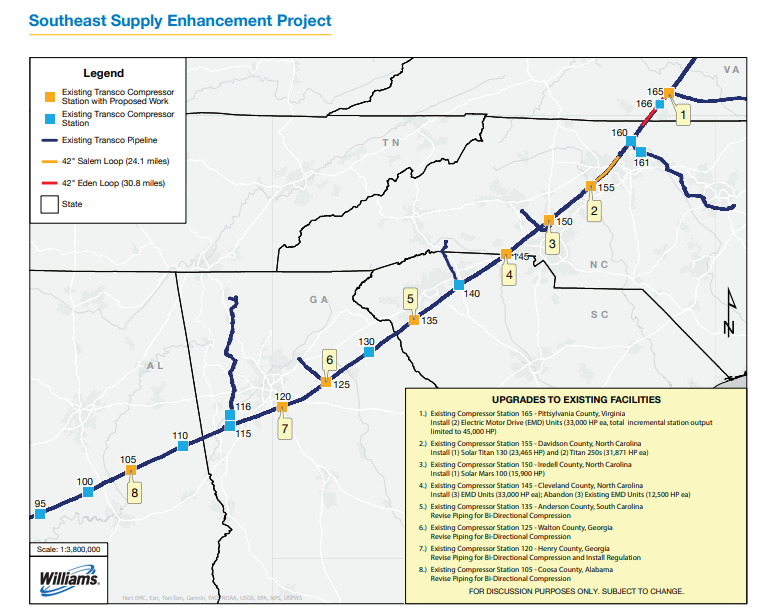
An image from Williams depicting a conceptual upgrade map of the Southeast Supply Enhancement Project. Image: Williams
Williams described the project in a Southeast Supply Enhancement Project fact sheet, stating that the pipeline “will add approximately 1.6 million dekatherms per day of pipeline transportation capacity to the Transco system by the fourth quarter of 2027.”
“That amount of gas is equivalent to what is needed to supply approximately 9.8 million homes with natural gas for hot water, heat, and cooking.”
Despite initial concerns about potential redundancy, FERC approved both projects. The commission determined that each developer demonstrated a clear and distinct need for the additional capacity.
This decision reflects a broader focus on bolstering the nation’s energy infrastructure to meet rising electricity demand.
Supporting a Growing Demand
By authorizing projects like the Williams’ Southeast Supply Enhancement and the parallel Mountain Valley Pipeline, regulators aim to ensure the energy grid can support continued economic and residential growth across the country.
In the February 2026 Data Center Report, ConstructConnect economists Michael Guckes and Devin Bell reported, “The near-term potential project pipeline continues to grow as actual data center starts accelerate.”
The economists emphasized the relationship between power and data center development, noting, “For growth to continue, the regulatory environment must continue to remain friendly, and investment in power and water resources must expand to meet data center demand.”
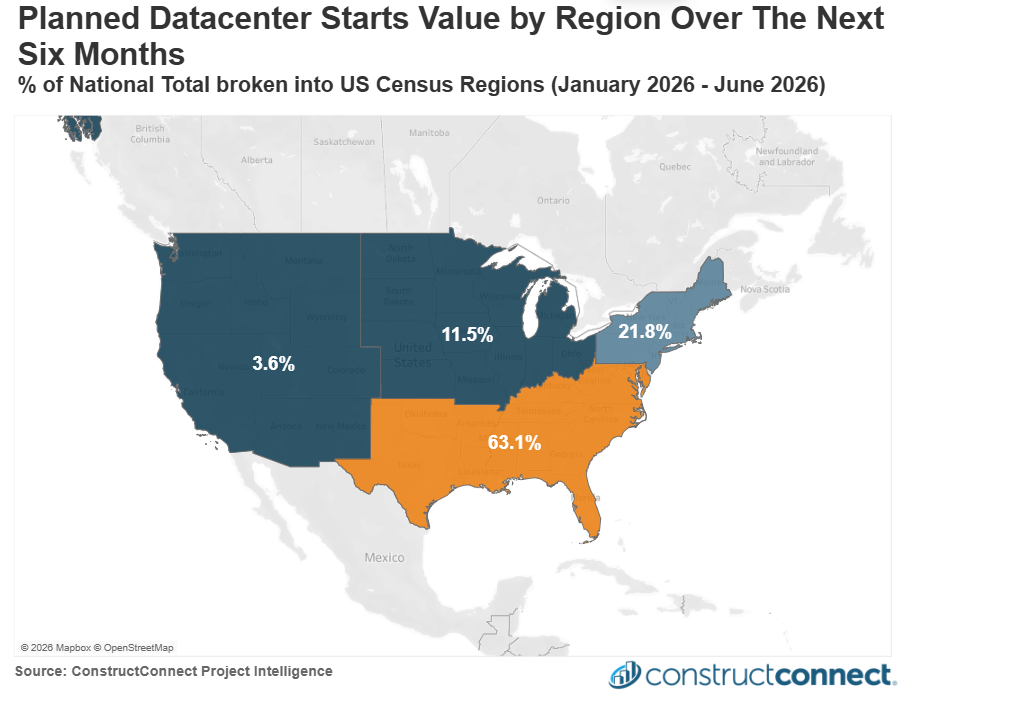
This map displays the regional distribution of total potential data center construction start values across the four US census regions over the next 6 months. Image and Data powered by ConstructConnect Project Intelligence
ConstructConnect Project Intelligence (CCPI) is tracking 76 data center projects, totaling over $88 billion, in various stages of preconstruction, with start dates in the next six months, according to the February Data Center Report.
The economists added a word of caution, “These projects remain in differing stages of preconstruction, with no guarantee of reaching groundbreaking.”
Pipelines the “Backbone” of US Energy
The push for new pipeline capacity aligns with statements from federal regulators about the future of energy in the U.S. At a forum in December, FERC Chair Laura Swett described pipelines as the “backbone” of America’s energy system, underscoring their importance for grid stability and reliability.
As the pipeline projects prepare to break ground, they represent a significant investment in the Southeast’s energy future.
Stay Connected
Stay connected with ConstructConnect News for construction industry news and construction market analysis to stay ahead of what’s building next.
About ConstructConnect
At ConstructConnect, our software solutions provide the information construction professionals need to start every project on a solid foundation. For more than 100 years, our insights and market intelligence have empowered commercial firms, manufacturers, trade contractors, and architects to make data-driven decisions and maximize productivity.
ConstructConnect is a business unit of Roper Technologies (Nasdaq: ROP), part of the Nasdaq 100, S&P 500, and Fortune 1000.
For more information, visit constructconnect.com