KEY POINTS
-
West Texas Intermediate (WTI) is produced and refined largely within the U.S., and this geographic insulation has muted the impact of the Iran war on its price.
-
At $101 per barrel, WTI is trading at a roughly $23 discount to Brent, an event that has been extremely rare in the decades of available data.
-
For construction, higher energy costs are historically tied to higher construction costs. This time, the picture is complicated by tariffs that have already raised prices on energy intensive materials such as steel and copper.
The Iran War conflict began in February with U.S. and Israeli strikes on key Iranian infrastructure, followed by Iranian attacks on energy facilities in 14 Middle Eastern nations, including major producers such as Saudi Arabia, Iraq, the UAE, and Kuwait.
At the same time, Iran has used its ability to threaten civilian shipping to sharply curtail traffic through the Strait of Hormuz. Where nearly 60 energy carrying ships once passed through daily, that figure has dropped to as few as three.
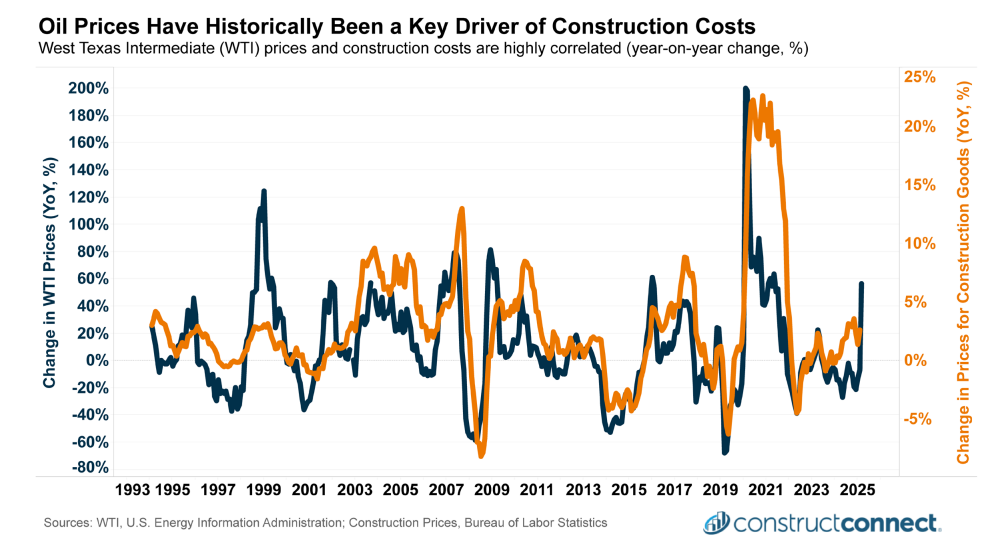
West Texas Intermediate (WTI) is produced and refined largely within the U.S., and this geographic insulation has muted the impact of the Iran war on its price. At $101 per barrel, WTI is trading at a roughly $23 discount to Brent, an event that has been extremely rare in the decades of available data. Image: ConstructConnect
Before the war, roughly a third of the world’s seaborne oil and a fifth of its liquefied natural gas moved through this narrow channel, so today’s disruption is significant. This shock has sent global oil and gas prices sharply higher.
Brent Crude, a key global energy benchmark, has climbed from about $72 per barrel in late February to more than $138 per barrel. This marks only the third time since at least the late 1980s that the price has exceeded $120.
In the United States, however, West Texas Intermediate (WTI) tells a different story. WTI is produced and refined largely within the U.S., and this geographic insulation has muted the impact of the Iran war on its price.
At $101 per barrel, WTI is trading at a roughly $23 discount to Brent, an event that has been extremely rare in the decades of available data.
Natural gas prices show a similar divergence, with EU buyers paying nearly $18 per MMBtu for imported gas while U.S. prices have edged down from over $3 per MMBtu to about $2.79.

For construction, higher energy costs are historically tied to higher construction costs. This time, the picture is complicated by tariffs that have already raised prices on energy-intensive materials such as steel and copper.
European based building products will face even steeper production costs due to their greater exposure to Brent linked energy.
The silver lining for North American builders is a temporary cost advantage for domestically produced energy-intensive products over imported goods.
Even so, keeping bids aligned with rising input costs will be challenging, and owners and developers should be prepared for bids to move higher in the near term.
Stay Connected
Stay connected with ConstructConnect News for construction industry news and construction market analysis to stay ahead of what’s building next.
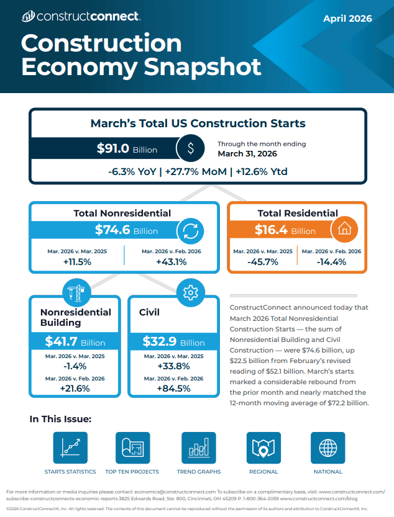
Read the Construction Economy Snapshot for more details on construction labor, trends, and regional analysis.
About ConstructConnect
At ConstructConnect, our software solutions provide the information construction professionals need to start every project on a solid foundation. For more than 100 years, our insights and market intelligence have empowered commercial firms, manufacturers, trade contractors, and architects to make data-driven decisions and maximize productivity.
ConstructConnect is a business unit of Roper Technologies (Nasdaq: ROP), part of the Nasdaq 100, S&P 500, and Fortune 1000.
For more information, visit constructconnect.com