KEY POINTS
-
Fort Bliss started construction on 3D-printed barracks in collaboration with ICON Construction, marking the largest deployment of robotic construction technology for the U.S. Department of Defense.
-
Using robotics, the walls of the barracks can be completed in just over a week.
-
The new barracks will house 56 soldiers per building, providing proximity to essential amenities such as gyms, dining facilities, and recreation areas.
Fort Bliss broke ground on its first 3D-printed barracks designed to house soldiers stationed for border security missions, according to the El Paso Times. The initiative, a collaboration with ICON Construction, represents the largest deployment of robotic construction technology for the U.S. Department of Defense to date.
The ribbon-cutting ceremony, held on March 26, showcased the capabilities of ICON’s 3D printer, which began layering the walls of the new barracks. ICON has completed over 245 structures using 3-D printing and robotics in construction.
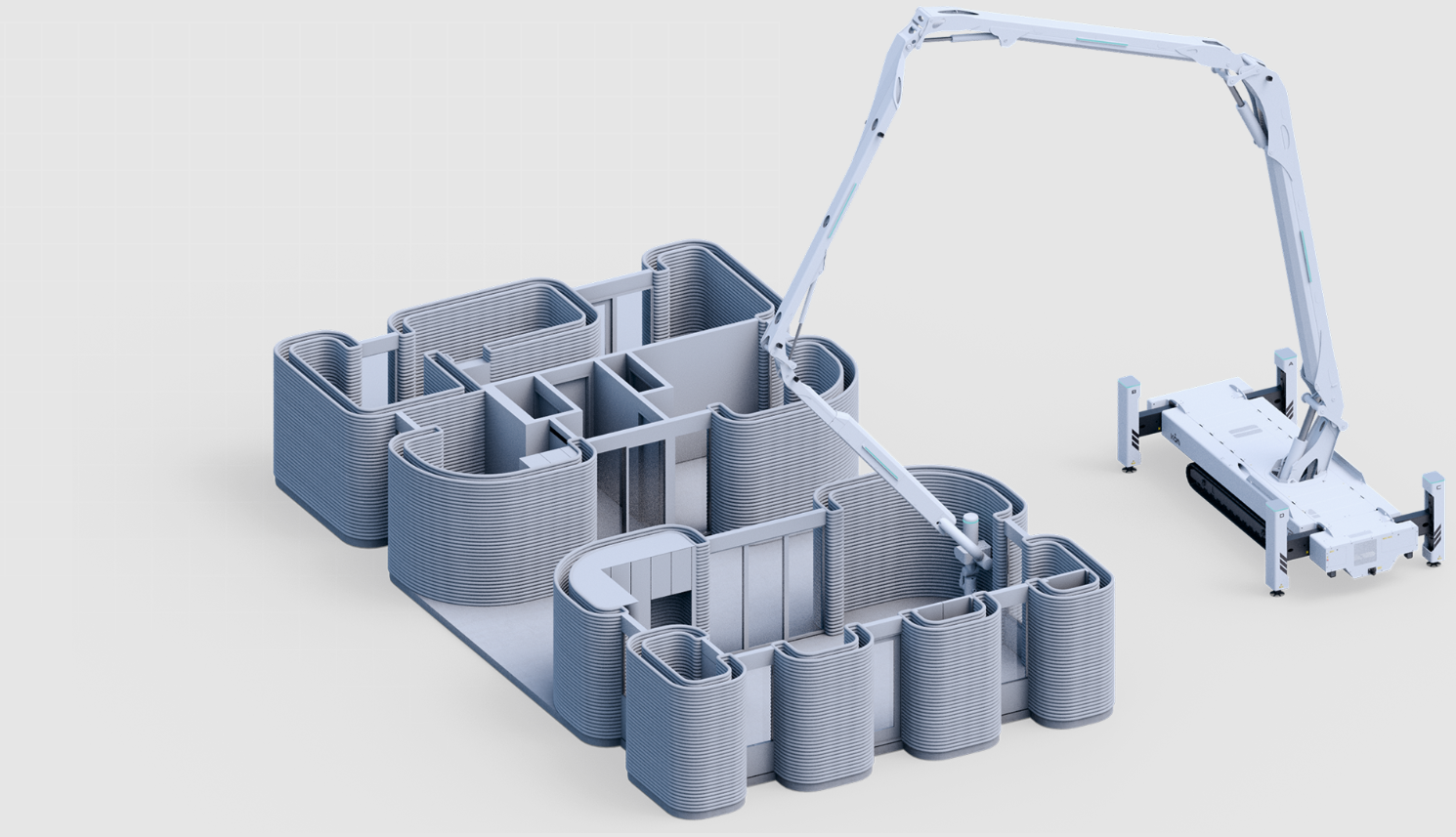
ICON’s 3-D printed concrete system, shown in an illustration, integrates robotics, software, materials, and architecture, along with training and ongoing support. Image: ICON
Building Walls Faster
According to ICON, the Titan system, shown above in an ICON website illustration, is a next-generation robotic construction platform designed to build multi-story wall systems faster, with higher quality and greater cost efficiency.
Titan is engineered to deliver walls at approximately $20 per square foot, ICON states on its website, a 40% reduction compared to traditional methods. The 3-D printed concrete system integrates robotics, software, materials, and architecture, along with training and ongoing support.
ICON’s 3-D concrete work significantly reduces construction time. Traditional methods requiring multiple materials and teams are replaced by robotics, enabling walls to be completed in just over a week and entire buildings in approximately 120 days.
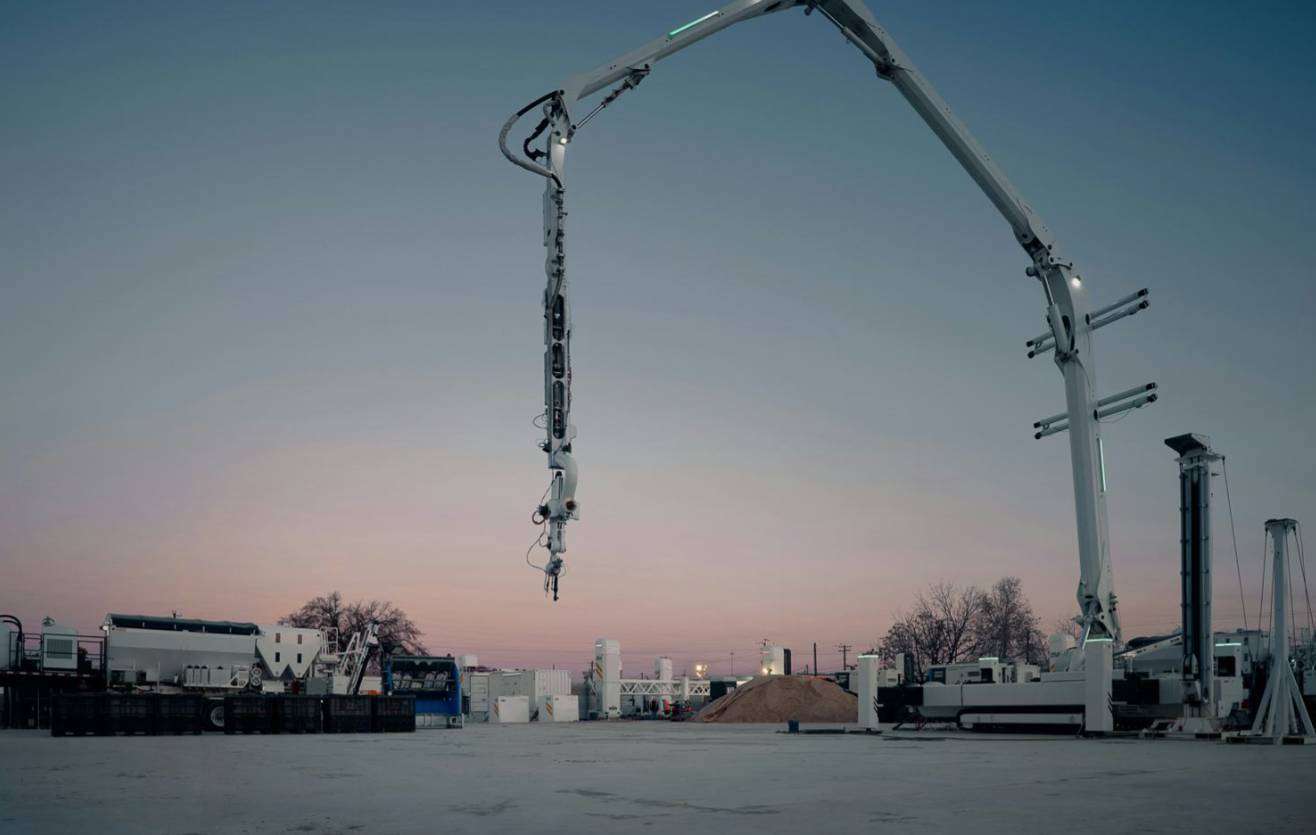
An undated image of a Titan 3-D concrete printing system. Image: ICON
Open-Bay Barrack Design
The project is part of a $62.8 million contract to build 10 transient training barracks, each capable of housing 56 soldiers. The first set of troops is expected to move in by August 2026.
The barracks will feature an open-bay design and provide soldiers with proximity to essential amenities, including gyms, dining facilities, and recreational areas.
Fort Bliss, spanning New Mexico and Texas with headquarters in El Paso, is a historic U.S. Army post established in 1848, renowned for its vast restricted airspace and maneuver area, making it a critical hub for missile and artillery training.
The Army post covers approximately 1,700 square miles, including the Castner Range National Monument. It extends into El Paso County, Texas, as well as Doña Ana and Otero counties in New Mexico.
Stay Connected
Stay connected with ConstructConnect News for construction industry news and construction market analysis to stay ahead of what’s building next.
About ConstructConnect
At ConstructConnect, our software solutions provide the information that construction professionals need to start every project on a solid foundation. For more than 100 years, our keen insights and market intelligence have empowered commercial firms, building product manufacturers, trade contractors, and architects to make data-driven decisions, streamline preconstruction workflows, and maximize their productivity. Our newest offerings—including our comprehensive, AI-assisted software—help our clients find, bid on, and win more projects.
ConstructConnect operates as a business unit of Roper Technologies (Nasdaq: ROP), a constituent of the Nasdaq 100, S&P 500, and Fortune 1000.
For more information, visit constructconnect.com