KEY POINTS
-
Gasoline prices dropped 10.8%, diesel fell 8.2%, and a weak homebuilding market helped reduce pressure on construction material costs.
-
Tariffs on imports like aluminum and steel have significantly raised factory-gate prices, with aluminum rising 30.5% year-over-year.
-
Supply chain disruptions and material shortages from the pandemic continue to push up prices across key construction materials.
Consumer Prices vs. Construction Costs
The U.S. Bureau of Labor Statistics (BLS) reports that as of December 2025, the year-over-year increase in consumer prices (CPI-U) and construction bid prices both stood at 2.7%.
While an annual price increase below 3.0% is generally considered manageable, several factors suggest construction material costs are more concerning than they may appear.
Fuel Prices Offer Temporary Relief
The international oil market has been relatively stable, with gasoline prices decreasing by 10.8% in the PPI and diesel fuel costs dropping by 8.2%. Additionally, the weak new homebuilding market has eased pressure on construction materials.
Softwood lumber prices declined 8.2%, while plywood and gypsum saw slight gains of 0.6% and 0.5%, respectively. Particle board and oriented strandboard (OSB) prices retreated significantly, falling 28.5%.
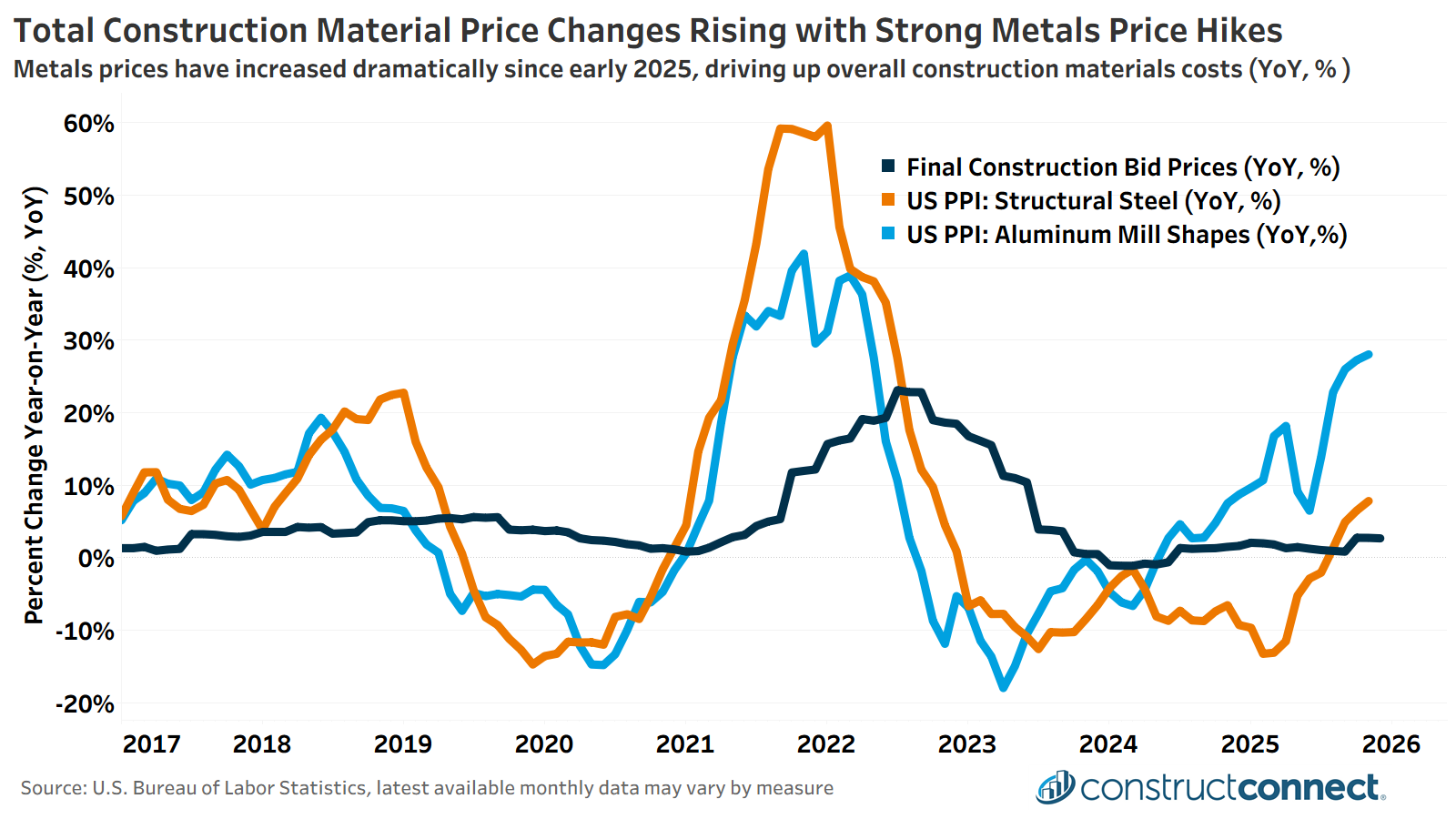 Shown is a chart of final bid prices by year-over-year percentage change, as well as those for structural steel and aluminum mill shapes from the PPI. Steel and aluminum products are among the most impacted. The PPI index for “steel bars, plates, and structural shapes” increased 12.1%, while “steel pipe and tube” gained 9.4%. Image: ConstructConnect
Tariffs and Factory Gate Prices
The PPI data, which tracks prices at the factory gate, does not account for transportation or import costs. This is significant given the current U.S. tariff landscape.
Tariffs can indirectly raise prices by increasing input costs or giving domestic producers cover to nudge prices higher.
Key Construction Material Price Hikes
Two key PPI sub-indices reveal broader trends in construction material prices. The “inputs to new construction” series rose 3.5% year-over-year, while the “construction materials special index” climbed a steeper 6.2%.
These figures indicate that some materials are experiencing sharp price hikes, particularly those affected by tariffs.
Steel and aluminum products are among the most impacted.
The PPI index for “steel bars, plates, and structural shapes” increased 12.1%, while “steel pipe and tube” gained 9.4%.
Aluminum mill shapes saw a staggering 30.5% rise, driven by U.S. production shortfalls and heavily tariffed imports, especially from Canada.
Copper wire and cable prices surged 22.3%, reflecting copper’s critical role in AI-linked data centers, electric power expansions, and battery storage systems.
Other significant year-over-year price changes include:
-
Plumbing fixtures and fittings: up 9.0%
-
Precast concrete products: gained 7.5%
-
Heating equipment: climbed 7.3%
-
Construction sand, gravel, and crushed stone: rose 6.1%
-
Lighting fixtures: advanced 5.8%
-
Construction machinery and equipment: increased 5.6%
-
Air conditioning equipment grew 5.3%
COVID-19’s Lingering Impact
The lingering effects of COVID-19’s economic impact continue to disrupt supply chains, with freight handling and material shortages driving persistent price spikes.
Several PPI sub-indices have seen price increases of at least 50% since the start of the 2020s, including gypsum, insulation materials, sand and gravel, steel, aluminum, paints, heating and air conditioning equipment, and copper wire.
These ongoing challenges underscore the volatility in construction material costs, leaving industry stakeholders with plenty to be concerned about.
About ConstructConnect
At ConstructConnect, our software solutions provide the information construction professionals need to start every project on a solid foundation. For more than 100 years, our keen insights and market intelligence have empowered commercial firms, building product manufacturers, trade contractors, and architects to make data-driven decisions, streamline preconstruction workflows, and maximize their productivity. Our newest offerings—including our comprehensive, AI-assisted software—help our clients find, bid on, and win more projects.
ConstructConnect operates as a business unit of Roper Technologies (Nasdaq: ROP), a constituent of the Nasdaq 100, S&P 500, and Fortune 1000.
For more information, visit constructconnect.com