KEY POINTS
-
BlackRock, Carhartt, Ford and Google said their new skilled-trades alliance starts with training commitments already reaching 30 states, giving the effort an immediate national footprint.
-
The timing is notable for construction, as JLL estimated 2.1 million skilled-trades positions could go unfilled by 2030, a gap that threatens schedules, operating costs and the industry’s ability to modernize aging buildings and infrastructure.
-
The alliance is emphasizing apprenticeships, pre-apprenticeships and broader recruiting, a strategy that aligns with BlackRock’s view that infrastructure-related trades offer above-average wages and earn-while-you-learn career paths.
Four titans of US industry, including BlackRock, Carhartt, Ford, and Google, said Tuesday they are launching the Alliance for America’s Skilled Trades. The new workforce initiative is aimed at expanding training access as contractors, owners, and manufacturers struggle to secure electricians, technicians, and qualified builders for U.S. projects.
The alliance members said in a joint statement from workwear manufacturer Carhartt, that they will focus on widening the pipeline into the trades, scaling apprenticeship-style training, and bringing in more industry, labor, education, and nonprofit partners.
Labor Focus Lines Up with On the Ground Reality
In its joint statement, Google, Blackrock, Ford, and Carhartt said, "The United States is experiencing a surging demand for skilled workers across industries critical to the country's future, creating a milestone moment for the American people. "
The construction labor focus lines up with what contractors and facility owners are already facing on the ground. JLL reported in April, that 53% of U.S. commercial building stock was delivered before 1990, while demand is rising for workers who can modernize older assets and support data centers, advanced manufacturing, and other technically demanding facilities.

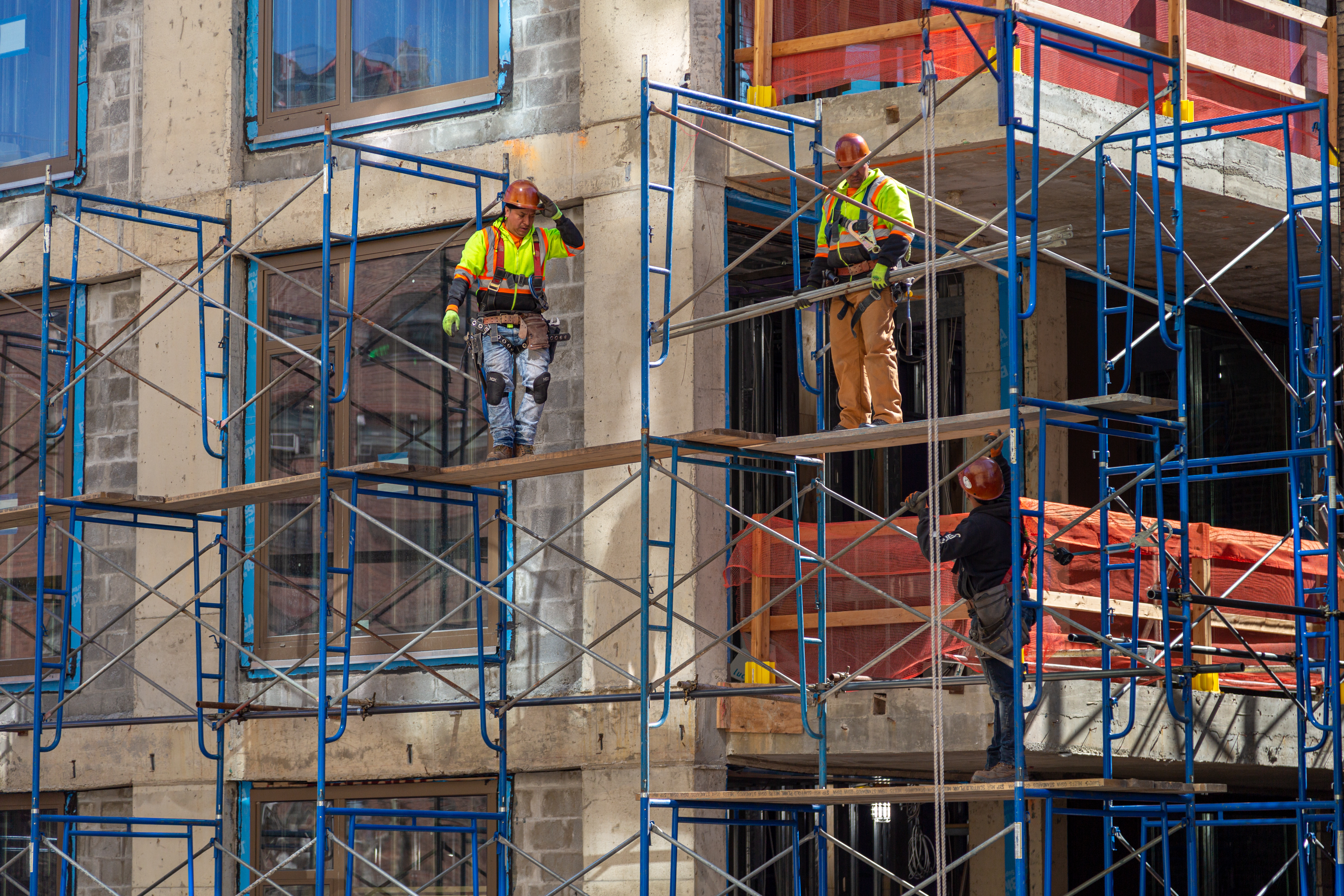
Four titans of US industry, including BlackRock, Carhartt, as shown above, Ford, and Google, said Tuesday they are launching the Alliance for America’s Skilled Trades. The new workforce initiative is aimed at expanding training access as contractors, owners, and manufacturers struggle to secure electricians, technicians, and qualified builders for U.S. projects. Image: Carhartt
ConstructConnect economists Michael Guckes and Devin Bell, recently reported, for example, that construction starts in one of these sectors, Data Centers, have accounted for over one-fifth of all Nonresidential building (NRB) starts over the last 12 months.
Separately, Bell wrote that, "The labor pool is not expanding at the pace the industry needs, and the outlook points to continued pressure. To mitigate these risks, firms will need to focus on retaining existing workers while building recruitment pipelines among demographic groups which may have been overlooked."
Industry leaders have taken notice. In a Fortune op-ed piece July 21, 2026, top executives from Blackrock, Google, Ford, and Carharrt wrote that "No single company or industry can prepare a country for this opportunity on its own. However, we can help address these challenges and strengthen pathways to opportunity for people and their families – if we act together."
Construction Labor Imbalance in Focus
JLL’s April research framed the shortage in stark terms, estimating that 2.1 million skilled-trades jobs could go unfilled by 2030. The firm said the imbalance threatens everything from construction timelines to energy costs and building safety, with electricians, HVAC technicians, plumbers, pipefitters and equipment operators all in the pressure zone.
Some of the fastest-growing needs JLL identified include electrician jobs, projected to grow 9.5% through 2034 and HVAC technician roles anticipated to grow at 8.1%, both sit above the 3.1% average for all occupations.
Last year alone, JLL said, nearly 600,000 major skilled-trades jobs were posted nationally, while only about 150,000 new workers entered through apprenticeship programs.
BlackRock made a similar case in its January analysis, arguing that the infrastructure buildout now underway, including energy, manufacturing and AI-related projects, will require far more electricians, plumbers, HVAC technicians, welders and carpenters than the current pipeline is producing.
"No single company or industry can prepare a country for this opportunity on its own. However, we can help address these challenges and strengthen pathways to opportunity for people and their families – if we act together."
Jim Farley, Chief Executive Officer, Ford Motor Company. Linda Hubbard, President and Chief Executive Officer, Carhartt. Bayo Ogunlesi, Chairman and Chief Executive Officer of Global Infrastructure Partners, a part of BlackRock. Ruth Porat, President and Chief Investment Officer, Alphabet and Google.
Construction Labor Gets Attention, and Commitments
The alliance said it plans to push more evidence-based workforce development models, especially apprenticeships and pre-apprenticeships that let workers earn while they learn. It also said it will work with Burning Glass and Jobs for the Future on a report to measure workforce gaps, track progress and identify best practices.
That approach fits the economics of the labor market. BlackRock said infrastructure-related skilled trades often pay above-average wages in the U.S., support stable employment and financial security, and offer a path forward without the cost burden of a four-year college degree.
The founding companies are also arriving with existing commitments. In materials tied to the launch:
-
BlackRock said its Future Builders initiative will deploy $100 million over five years to connect 50,000 workers to skilled-trades training.
-
Ford committed $300 million in 2026 to skilled-trades workforce development and the “Essential Economy”.
-
Google invested $50 million for programs supporting 14 labor unions and four trade and contractor associations, with a goal of helping prepare more than 300,000 workers across more than 20 states for skilled-trades careers.
-
Carhartt launched its “For the Love of Labor” program in 2022 to support organizations that educate and train skilled-trades workers and help fill critical labor gaps. Since then, the initiative has backed more than 60 nonprofit and community organizations across the U.S.

Why Construction is Paying Attention
Labor shortages are tied to the industries driving the construction cycle, including grid upgrades, manufacturing expansion, transportation work, facility retrofits, and data-center development.
The near-term question is whether the coalition can help convert broad awareness into actual field capacity. The U.S. needs organized efforts to grow interest in the trades, just as we need more completions, more skilled workers, and more local training capacity aligned with the jobs contractors are bidding today.
The launch underscores a reality the construction industry has been signaling for years, that labor is central to whether the US can build its infrastructure, energy, and industrial projects on time and at scale.
If this alliance can translate corporate commitments into more apprentices, more completions, and more licensed craft workers, contractors will feel the difference where labor shortages hurt most: on bid capacity, project schedules, and getting the jobs done.
Stay Connected
Stay connected with ConstructConnect News for construction industry news and construction market analysis to stay ahead of what’s building next.
About ConstructConnect
At ConstructConnect, our software solutions provide the information that construction professionals need to start every project on a solid foundation. For more than 100 years, our keen insights and market intelligence have empowered commercial firms, building product manufacturers, trade contractors, and architects to make data-driven decisions, streamline preconstruction workflows, and maximize their productivity. Our newest offerings—including our comprehensive, AI-assisted software—help our clients find, bid on, and win more projects.
ConstructConnect operates as a business unit of Roper Technologies (Nasdaq: ROP), a constituent of the Nasdaq 100, S&P 500, and Fortune 1000.
For more information, visit constructconnect.com