KEY POINTS
-
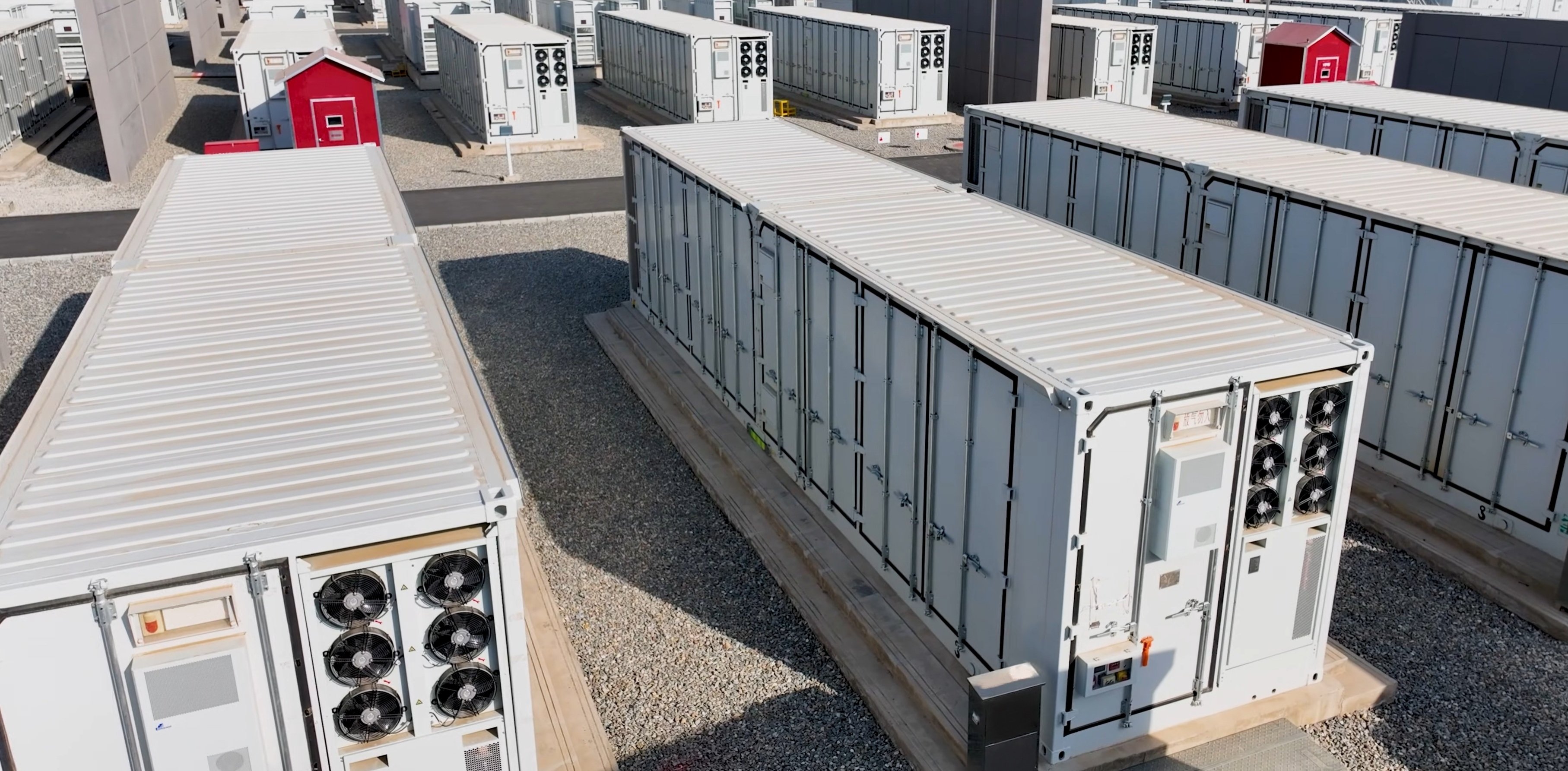
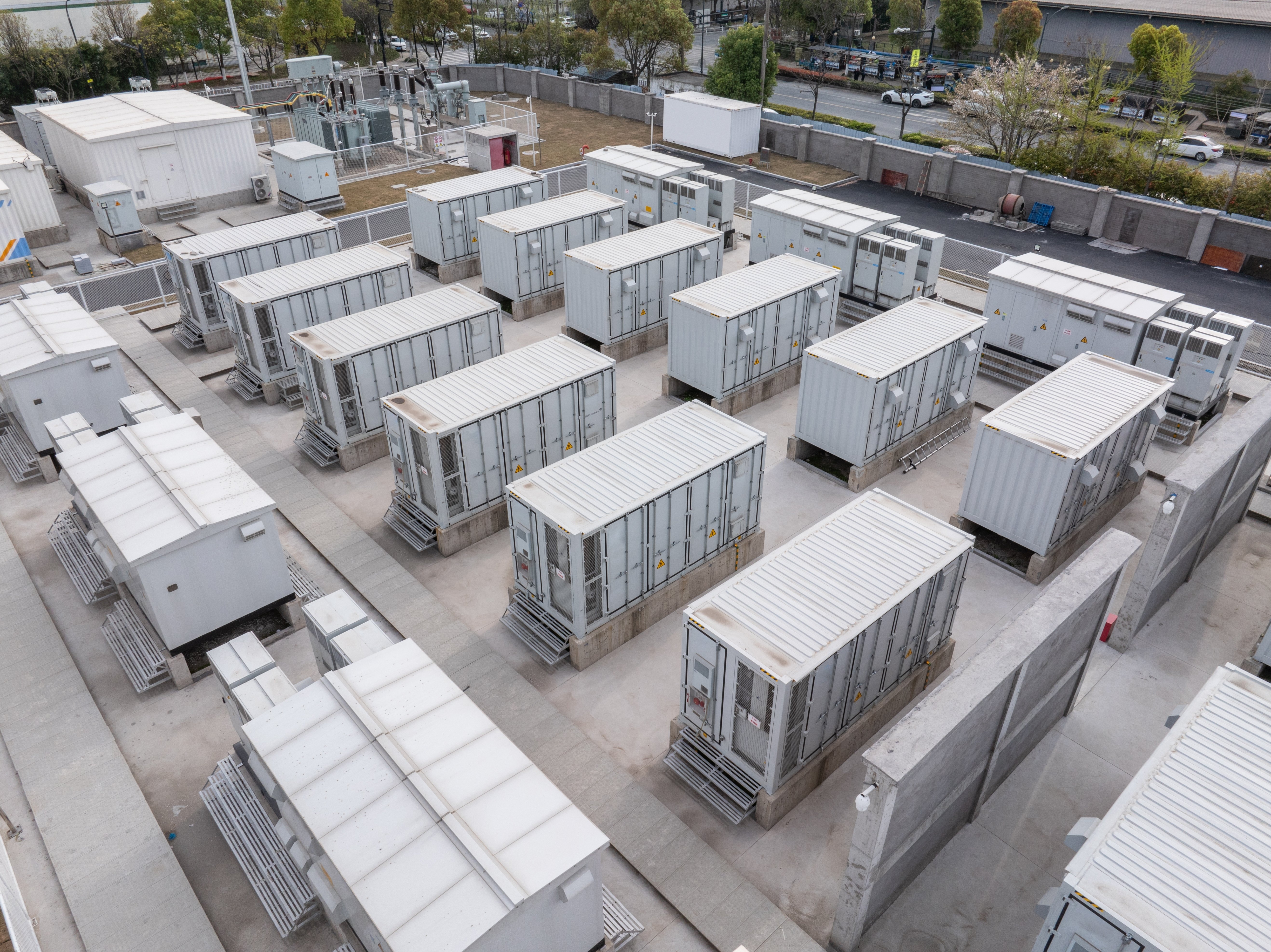
U.S. energy storage installations hit 57.6 GWh in 2025, a 30% jump over 2024 and four times 2022 levels, according to a new Solar Energy Industries Association report.
-
Total utility‑scale capacity reached 137 GWh, positioning energy storage as core grid infrastructure for both utilities and customers.
-
For construction firms, the demand for reliable electricity creates the potential for grid‑connected, revenue‑generating work that reshapes scopes, specs, partnerships, and profit models.
The U.S. energy storage landscape shifted in 2025, with the United States installing a whopping 57.6 gigawatt-hours (GWh) of new capacity. This jump in battery storage represents a 30% increase from the previous record set in 2024 and is four times what the industry installed just three years ago.
The data originates from the U.S. Energy Storage Market Outlook Q1 2026, published by the Solar Energy Industries Association (SEIA) and Benchmark Mineral Intelligence.
For construction professionals, these numbers tell a compelling story. Energy storage has evolved from a developing technology into an increasingly installed component of modern grid infrastructure.
Why Battery Storage, Now?
The SEIA report reveals a market driven by necessity. Demand for electricity is soaring—fueled by data centers, AI infrastructure, and general electrification. And utilities and grid operators seek ways to maximize the value of the grid.
Stored energy in batteries acts like a backup supply that can be quickly tapped when electricity demand suddenly jumps, reacting much faster than traditional peaker plants and helping smooth out the ups and downs of renewable power. Peaker plants are power plants that typically run only when electricity demand is very high, helping keep the energy grid running smoothly.

A rendering of a solar farm and battery storage units (in foreground) facility from Tesla Energy. Image: Tesla
Using batteries—both on the main grid and on the customer side in homes, businesses, and data centers lets producers or buyers of energy store extra energy. So, when demand (and prices) are low, the system can release the energy when demand surges.
Stored-energy systems, such as batteries, help shield power users from grid congestion and price spikes while also giving the broader power system greater flexibility.
Because of the surge in electricity demand, battery projects are moving from one-off, specialized work to a potential source of grid-connected, revenue-generating construction jobs. These projects may reshape scopes, specifications, partnerships, and profit potential for construction firms that know how to build and integrate storage.
“Battery systems have the technical flexibility to perform various applications for the electricity grid. They have fast response times in response to changing power grid conditions and can also store excess generation from the grid, allowing energy from solar or wind resources to be used during the time of highest value, not just when produced.”
Drivers for Standalone Battery Storage Deployment, U.S. Energy Information Administration, 2022
Electricity Stored
Energy storage in the form of batteries primarily improves infrastructure use and helps reduce the extreme peaks that typically occur just a few hundred hours per year.
Further, for an asset with strong current (!) demand and a forecast of continued demand, capturing electricity and bringing it to market when demand is high is a sound business principle. If electricity is that asset, batteries capture and store it, which can then be transmitted and possibly sold.
Ultimately, batteries provide increased round-the-clock reliability, smoothing power flows by providing a supply of electricity that can be tapped during periods of raised demand.
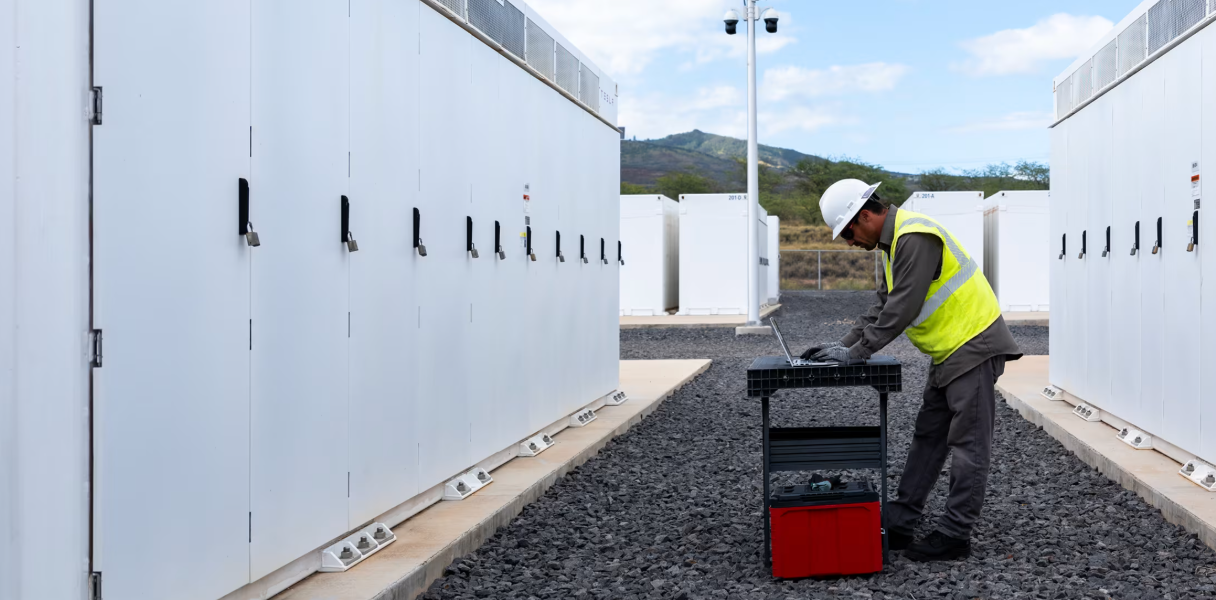
Image: Tesla Energy
By the end of 2025, the total installed utility-scale storage in the U.S. reached 137 GWh. SEIA projections anticipate that over 600 GWh of energy storage will be installed by 2030. This storage expansion, along with the corollary growth of the marketplace for stored energy buyers and sellers, is essential to maintaining stable energy prices and protecting US energy independence.
How Much is 57.6 Gigawatt Hours?
Adding 57.6 gigawatt-hours (GWh) of new battery storage capacity in 2025 is easier to grasp when you break it down.
A gigawatt-hour is a large unit for measuring the energy used or generated over time.
To make sense of it, it helps to start small. So instead of connecting big power to something like a huge data center, think about a single light bulb.

A watt is a unit of power—about what you’d see on a light bulb label—and a watt-hour measures how much energy something uses in one hour. For example, a single 100‑watt lightbulb left on for 10 hours uses 1 kilowatt-hour (kWh) of electricity.
‘Giga’ means one billion. So, a gigawatt-hour (GWh) is just the energy you’d use if something very large used one billion watts of power for one hour.
To put 1 GWh in household terms, the average U.S. home uses about 10,500 kWh of electricity per year. That means 1 GWh (1,000,000 kWh) is roughly the annual electricity use of about 100 average homes.
So, 57.6 gigawatt-hours (GWh) of new battery storage capacity in 2025 is roughly equivalent to the storage needed for the annual electricity use of about 5,500 average U.S. homes.

Residential Storage Takes Off
It is not just utility companies driving battery storage growth. Homeowners are increasingly adopting energy storage.
The residential energy storage sector added 3.1 GWh in 2025, marking a significant 51% year-over-year increase. The SEIA report noted that much of the growth came from the expansion of virtual power plant (VPP) programs.
In states like Massachusetts, Texas, Arizona, and Illinois, VPP programs allow homeowners to earn money by sharing their stored battery power with the grid during times of high demand.
This power-sharing arrangement creates a win-win: the grid gets the support it needs with its existing infrastructure, and homeowners can get paid while maintaining backup power for their own use.
Manufacturing Pivots to Meet Demand
One of the findings in the U.S. Energy Storage Market Outlook report is the shift in American manufacturing. As the electric vehicle (EV) market fluctuates, battery cell manufacturers have shown remarkable agility.
Because of the surge in electricity demand, battery projects are moving from one-off, specialized work to a potential source of grid-connected, revenue-generating construction jobs. These projects may reshape scopes, specifications, partnerships, and profit potential for construction firms that know how to build and integrate storage.
Many facilities pivoted from EV manufacturing toward dedicated energy storage production in 2025, the SEIA reported. They converted existing lines and adjusted plans to meet the appetite for stationary storage.
As of 2025, domestic lithium-ion battery cell manufacturing for stationary storage rose to over 21 GWh.
Furthermore, American facilities now boast the capacity to manufacture nearly 70 GWh of battery energy storage systems, according to SEIA, thus reducing reliance on international supply chains.
What’s Next
The rapid deployment of energy storage is a response to the evolving needs of the modern economy. Data centers, with their growing demand for reliable, round-the-clock power, are accelerating the adoption of battery storage.
The ability to store energy seems to have risen in importance alongside the ability to generate it.
Staying informed about the latest developments in the construction economy and infrastructure arena will be key for anyone looking to understand, participate in, or benefit from this evolving landscape.
Stay Connected
Stay connected with ConstructConnect News for construction industry news and construction market analysis to stay ahead of what’s building next.
About ConstructConnect
At ConstructConnect, our software solutions provide the information construction professionals need to start every project on a solid foundation. For more than 100 years, our insights and market intelligence have empowered commercial firms, manufacturers, trade contractors, and architects to make data-driven decisions and maximize productivity.
ConstructConnect is a business unit of Roper Technologies (Nasdaq: ROP), part of the Nasdaq 100, S&P 500, and Fortune 1000.
For more information, visit constructconnect.com