KEY POINTS
-
The Ratepayer Protection Pledge ensures that participating tech companies cover the costs of power generation and grid upgrades for AI data centers, preventing higher electricity bills for households.
-
Technology companies, including Amazon Web Services, Google, Meta, Microsoft, OpenAI, Oracle, and xAI, commit to creating jobs, funding infrastructure, and selling excess power back to grids.
-
The move comes as data center construction starts hit a record $25.2 billion in January 2026, the highest monthly total since tracking began in 2020, according to ConstructConnect’s March 2026 Data Center Report.
A new White House pledge announced March 4, 2026, aims to keep household electricity bills stable as data center construction ramps up nationwide.
On March 5, 2026, the White House brought leaders from many of the nation’s largest technology and AI companies together to sign a Ratepayer Protection Pledge. The agreement ensures AI-driven data center growth won’t increase electricity costs for households and communities.
The pledge is framed as a way to “power American innovation without raising electricity costs for families and communities,” according to the White House.
In simple terms, the administration is asking companies that build and operate large data centers to pay the full cost of the additional power and grid infrastructure they need, rather than shifting those costs onto everyday customers (ratepayers).
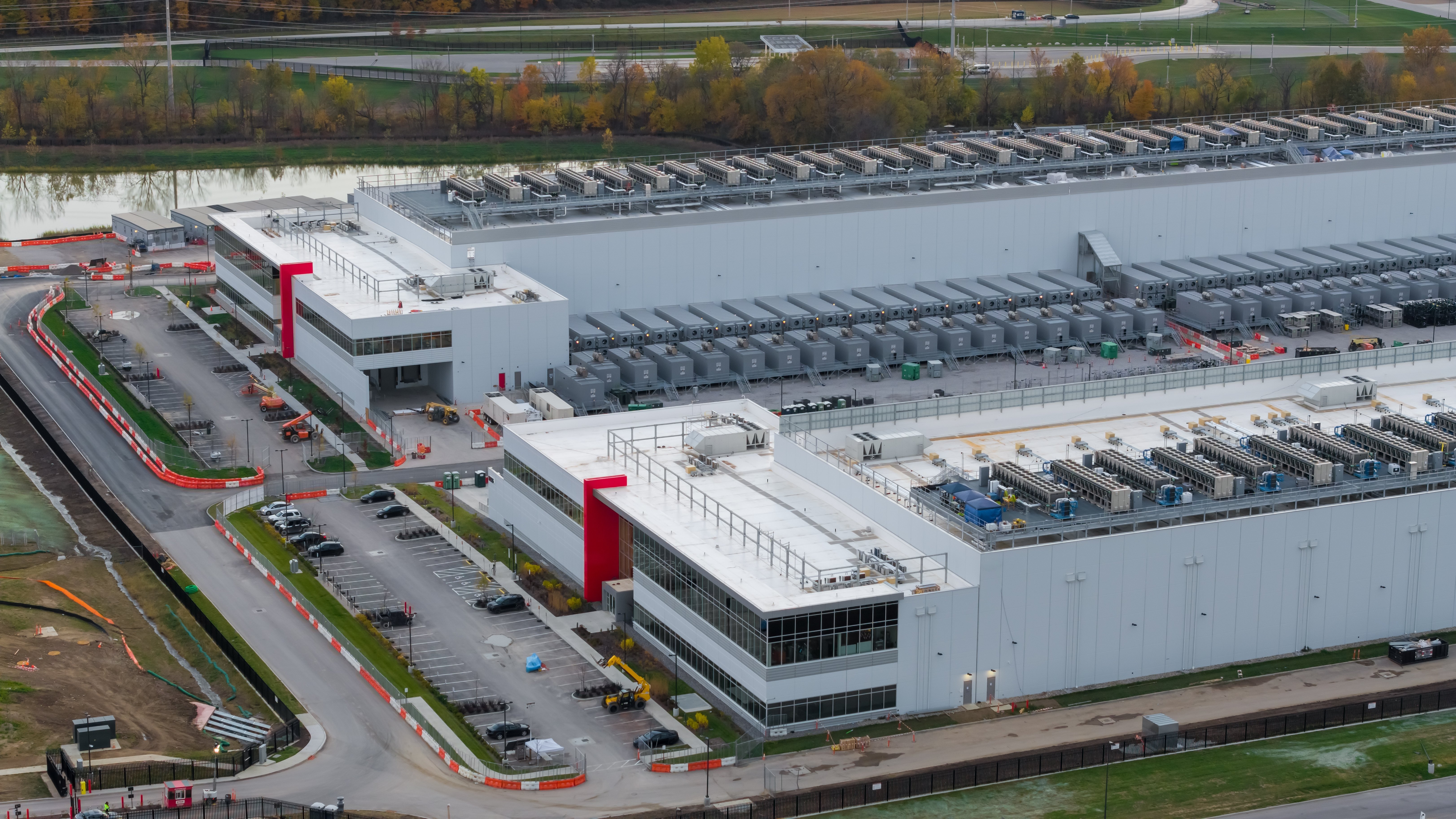
An aerial image of the Meta data center in New Albany, Ohio, is shown. Image: Shutterstock
The move comes as data center construction starts have reached a record high. According to ConstructConnect’s March 2026 Data Center Report, January 2026 data center starts totaled $25.2 billion, the highest monthly figure since recordkeeping began in 2020.
The report notes that 20 data center projects broke ground nationwide in January, lifting the trailing 12‑month total to $103.7 billion and pushing the average monthly spend over the same period to $8.6 billion.
[For more insights, see the March 2026 Data Center Report by ConstructConnect, which provides a comprehensive analysis of the trends shaping the future of AI infrastructure.]
What the Ratepayer Protection Pledge Says
According to the White House, the pledge creates a basic ground rule that when new AI data centers drive higher electricity demand, data center operators, and not households, should cover the incremental costs.
The administration describes three core expectations for participating companies:
-
Cover new power generation costs. Tech firms participating agree to cover the cost of all new power generation needed to run their AI data centers.
-
Fund grid upgrades. Companies will help pay for transmission and distribution upgrades that are necessary to connect and reliably serve these facilities, rather than leaving those investments to be recovered from general ratepayers.
-
Support system efficiency. Where possible, data centers are expected to structure their power supply to lower overall system costs, including by selling excess power or providing grid storage services.
Power Infrastructure Starts Forecast to Reach Record Levels
The pledge assumes that hyperscale data centers will act as anchor customers for new-generation transmission, distribution, and large-scale energy storage projects.
Power infrastructure starts are forecast to reach record levels in 2026, with further acceleration expected in the coming years, according to ConstructConnect’s March 2026 Data Center Report.
“This projection aligns with the latest Preliminary Monthly Electric Generator Inventory report from the Energy Information Administration, which indicates that U.S. power plant developers and operators plan to add 86 gigawatts of new utility-scale electricity generating capacity to the grid in 2026, a record-breaking figure,” the report stated.
“This unprecedented scale of power investment is vital to meeting the massive energy demands of the rapidly expanding data center sector.”
“As development accelerates, ensuring adequate power capacity will be essential to sustaining growth,” ConstructConnect said in its March 2026 Data Center Report.
.jpg?width=1600&height=900&name=2026-03%20--%20MAP%20Starts%20by%20State%20-%20TTM%20VIZ%20(1600X900).jpg)
US data center construction starts, shown on a map of trailing twelve-month spending, totaled $103.7 billion through January 2026, with an average monthly expenditure of $8.6 billion over the same period. Image and Data: ConstructConnect Data Center Report March 2026
Why It Matters for Construction and Infrastructure
ConstructConnect’s March 2026 Data Center Report highlights a robust near-term pipeline of 65 potential data center projects valued at $92.1 billion, with over 56% of the investment concentrated in the South and 26.7% in the Midwest.
This surge in activity aligns with the Ratepayer Protection Pledge, which underscores a stronger focus on community benefits and rate protection.
Administration officials linked the pledge to fostering “trust” with communities and ensuring families are not left to “foot the bill for AI’s energy consumption.”
For project owners, this likely translates to heightened attention on local hiring, workforce training, and ratepayer protections during site selection and permitting discussions.
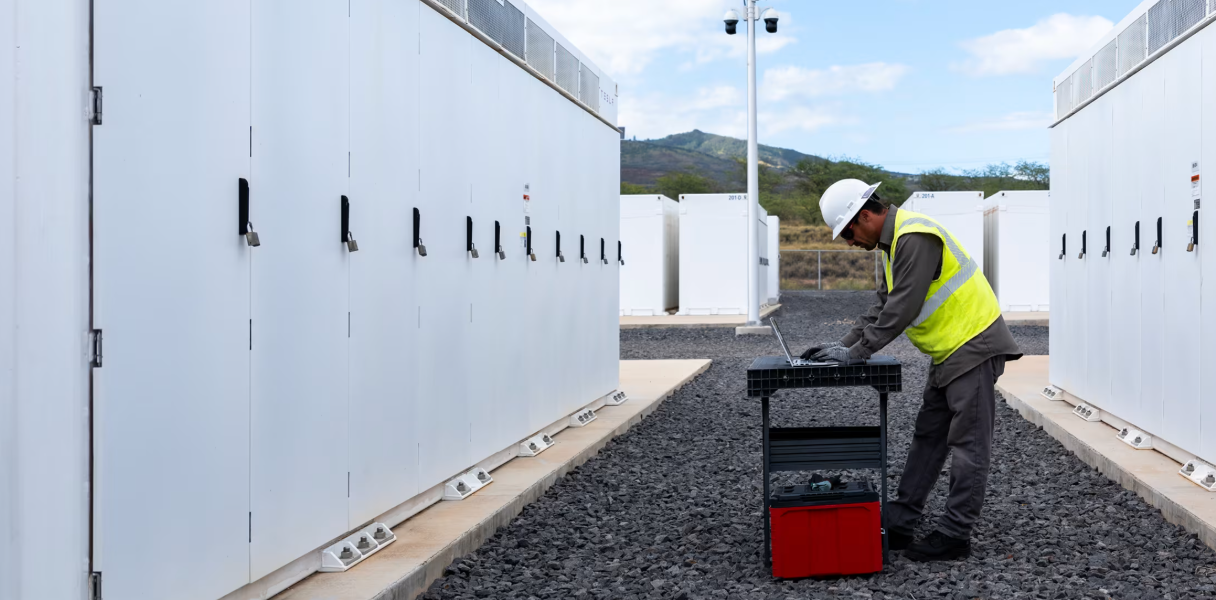
Stored-energy solutions, like the Tesla Megapack large-scale system shown above, have surged. In 2025, the United States installed 57.6 gigawatt-hours (GWh) of new capacity. This jump in battery storage represents a 30% increase, according to an industry report, from the previous record set in 2024, and is four times what the industry installed just three years ago. Image: Tesla
Commitments like xAI’s 1.2‑gigawatt power development and expanded Megapack installations emphasize the scale of grid‑scale storage and reliability projects tied to AI growth.
Contractors with capabilities in substation work, high‑voltage construction, and stored energy (battery) installations may find themselves at the center of AI‑driven investment plans.
Utilities and Industry Associations Respond
Utilities and industry associations have welcomed the framework as a way to drive economic growth from data centers while protecting existing customers from higher bills.
The Edison Electric Institute, Entergy, and Southern Company emphasized their focus on community benefits, grid reliability, and ensuring large customers “pay their fair share.”
At the same time, technology advocates, including ITI and the Taxpayers Protection Alliance, praised its balanced, market-driven approach to advancing U.S. technology leadership and affordable energy access.
Major Tech and AI Companies Sign
The White House said the group of major technology and AI companies, including Amazon Web Services, Google, Meta, Microsoft, OpenAI, Oracle, and xAI, would serve as initial signatories of the Ratepayer Protection Pledge.
Company leaders highlighted several key themes during the announcement, focusing on long-term energy partnerships, grid reliability, and shared benefits for communities.
OpenAI and Oracle highlighted energy self-sufficiency, local hiring, and the role of AI infrastructure in U.S. economic and national security. Amazon called the pledge a baseline for protecting ratepayers and fostering sustainable energy partnerships. Google emphasized aligning with energy affordability and infrastructure investment to drive U.S. innovation.
What to Watch
The Ratepayer Protection Pledge is an umbrella commitment, and many of the details that matter to owners, contractors, and local officials remain unknown.
Some questions include:
-
How will state utility commissions interpret and apply the pledge in rate cases and approvals?
-
What mix of on‑site generation, long‑term power purchase agreements, and grid upgrades do project owners pursue to meet their obligations?
-
How quickly can new power and grid projects move through planning, interconnection, and construction to keep pace with AI data center demand?
Energy affordability and grid reliability surfaced as central themes as data centers grow. For the construction industry, one message is that AI and energy infrastructure will continue to advance together, and energy rates will be a part of the conversation.
Stay Connected
Stay connected with ConstructConnect News for construction industry news and construction market analysis to stay ahead of what’s building next.
About ConstructConnect
At ConstructConnect, our software solutions provide the information construction professionals need to start every project on a solid foundation. For more than 100 years, our insights and market intelligence have empowered commercial firms, manufacturers, trade contractors, and architects to make data-driven decisions and maximize productivity.
ConstructConnect is a business unit of Roper Technologies (Nasdaq: ROP), part of the Nasdaq 100, S&P 500, and Fortune 1000.
For more information, visit constructconnect.com




%20designed%20to%20store%20and%20manage%20electricity%20from%20nearby%20solar%20farm.jpg)