KEY POINTS
-
Google will add three Texas data centers powered by renewable energy and a $30 M clean-energy fund.
-
Data and AI centers increase power load requests from 56 GW to 205 GW, raising concerns about the grid’s capacity and associated costs.
-
Texas solar and wind increase, but transmission limits and permitting delays threaten progress.
Google’s November 2025 announcement that it plans to construct three new data centers in Texas at a cost of $40 billion is the latest in a series of new projects proposed over the next few years.
At the present time, there are 375 data centers already operating in Austin, Houston, Dallas, and San Antonio, with another 70 currently under construction, according to research and advisory firm Baxtel.
The state offers relatively cheap energy, great expanses of land, and a business-friendly economic environment.
Google’s Plan to Tackle Energy Demands in Texas
However, these facilities are power hungry. This either places more pressure on electrical grids already burdened with regular demand or means the centers themselves need to come up with their own power plan. That’s what Google intends to do.
“Google is committed to responsibly growing its infrastructure by bringing new energy resources onto the grid, paying for costs associated with its operations, and supporting community energy efficiency initiatives,” the company said. “In Texas, this includes a new $30 million Energy Impact Fund to scale and accelerate energy initiatives, along with more than 6,200 megawatts of new energy generation and capacity contracted to date through power purchase agreements with energy developers.”
However, it’s not clear whether all the new data centers and AI facilities planned for Texas will be self-powering. Some may be hybrids like the Stargate project near Abilene, which will draw power from its own natural gas generator as well as from the grid.

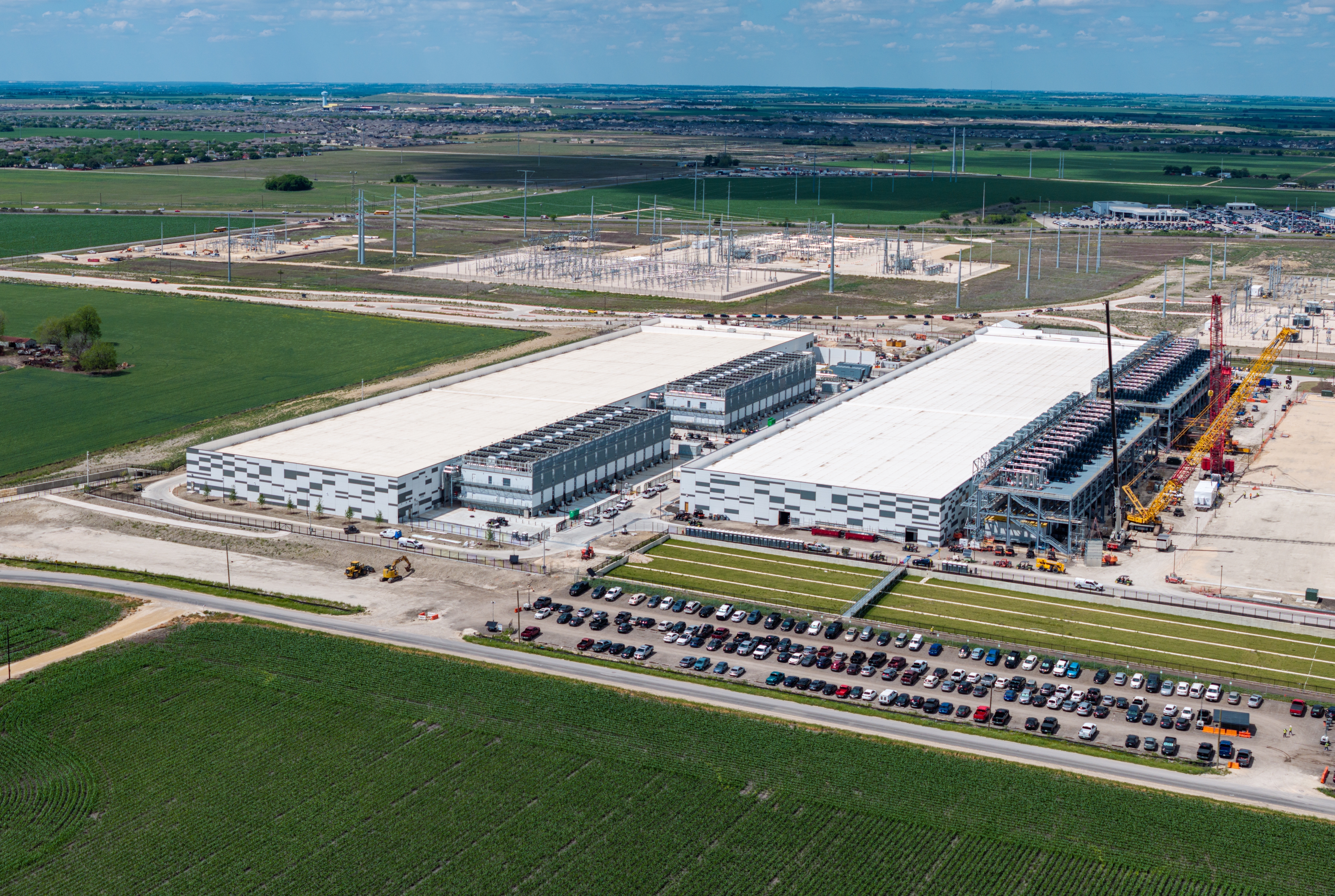
The first two buildings, OpenAI and Oracle’s Stargate data center in Abilene, Texas, are already operational, with the remaining six buildings expected to be completed by mid-2026. Image: OpenAI/Stargate
Texas Grid Under Surging Demand
In September 2024, the Electric Reliability Council of Texas (ERCOT), an independent, nonprofit organization that operates most of the state’s electric grid, reportedly tracked 56 gigawatts in large load interconnection requests. That number almost quadrupled to 205 gigawatts within a year.
Kristi Hobbs, ERCOT’s vice-president of system planning and weatherization, told a Public Utility Commission of Texas meeting in October that the increased volume of the energy demand from large data centers, particularly those serving artificial intelligence, will require an adjustment of the planning processes to keep the grid reliable.

The increase in demand is likely to cause concern among traditional Texas consumers as summer heat results in peak power demands. In July, the U.S. Energy Information Administration (EIA) reported that electricity prices for Texas residential customers and businesses were 24 percent below the national average. In the current environment of data center growth, the cost of electricity is almost certain to increase significantly.
“The sharpest jump will occur in the ERCOT-North hub in Texas, where prices are forecast to surge 45 percent due to high summer demand paired with limited supply,” writes Brien Sheahan, former chairman and CEO of the Illinois Commerce Commission. “While natural gas prices remain a major driver of power costs, the EIA notes that Texas’ 2026 increases reflect large hourly price spikes.”
The state needs to pull out all the stops in order to meet future forecast demands, and renewable energy sources appear to be doing the job.
Renewables Expand but Face Transmission Hurdles
Sean Kelly, co-founder and CEO of energy forecasting company Amperon, writes over the last four years, ERCOT’s solar capacity had increased by more than 200 percent. One reason is that renewables such as wind and solar can come online far faster than traditional natural gas power plants. Kelly also notes since solar has no fuel costs, it operates at a low marginal cost, thus pushing market prices down.
However, the Solar Energy Industries Association has concerns. It says the Donald Trump administration “is using every tool at its disposal to slow down solar and storage projects,” and that “under Washington’s new energy permitting bureaucracy, projects large and small are being trapped in limbo.”
It estimates Texas alone accounts for nearly 40 percent of the at-risk projects. Further data suggests due to insufficient transmission capability, eight TWh of solar and wind power in Texas was curtailed in 2024.
Fortunately, and according to Cleanview’s project tracker in November, politics are not slowing down renewable energy projects. There were 877 solar projects alone under development in Texas. In fact, as of August, ERCOT reported five times the number of solar and wind interconnection requests versus natural gas.
“Combined, wind and solar can now supply up to nearly half of ERCOT’s total electricity demand, which makes the market less reactive to increases in the cost of natural gas,” Kelly continues.
Renewables and accompanying battery storage also help to stabilize supply during peak periods or disruptions of fuel supplies to traditional power plants.
Hopefully, this could mitigate forecast energy cost increases over time. The continued growth of renewables in Texas is the best outcome for all concerned. As Kelly warns, if supply is pinched and electricity costs do in fact increase as much as some are forecasting, those data centers won’t be coming to Texas at all, unless they find the added investment capital to somehow power themselves.
Kelly’s conclusion is compelling.
“The highly politicized national energy debates are missing the point. It’s not about ideology; it’s about doing what works. And what works in Texas is competition, consumer choice, and resources that prove their worth economically. If we continue to let data — not dogma — drive energy decisions here, Texas will be fine, and we might just show the rest of the country a thing or two in the process.”
Stay Connected
Stay connected with ConstructConnect News, your source for construction economy insights, market trends, and project news.
About ConstructConnect
At ConstructConnect, our software solutions provide the information that construction professionals need to start every project on a solid foundation. For more than 100 years, our keen insights and market intelligence have empowered commercial firms, building product manufacturers, trade contractors, and architects to make data-driven decisions, streamline preconstruction workflows, and maximize their productivity. Our newest offerings—including our comprehensive, AI-assisted software—help our clients find, bid on, and win more projects.
ConstructConnect operates as a business unit of Roper Technologies (Nasdaq: ROP), a constituent of the Nasdaq 100, S&P 500, and Fortune 1000.
For more information, visit constructconnect.com

.jpg?width=180&height=180&name=JOHN%20BLEASBY%20(1).jpg)


%20at%20twilight%20in%20US..jpg)