KEY POINTS
-
AGC launches the America’s Moving Forward campaign to pressure Congress to pass a long-term Surface Transportation Reauthorization before the IIJA expires Sept. 30, warning that delays will stall multi-year highway, bridge, and transit megaprojects central to economic growth.
-
Recent construction job gains in major metros are tied to federal and state transportation investments, yet looming gaps, Highway Trust Fund depletion by 2028, a $152B 10-year transit gap, and major roadway shortfalls, threaten future projects despite IIJA’s historic funding boost.
-
AGC is spending up to $2M on targeted digital outreach in key districts, promoting measures like the BASICS Act and stressing that robust, timely reauthorization supports workforce, supply chains, housing, and regional competitiveness, while warning that weak or late action risks jobs and recent economic gains.
The group’s newly launched initiative, America’s Moving Forward, aims to rally support for fresh federal highway and transit funding that is deemed essential to sustaining economic growth.
Urgent Reauthorization Push
At the heart of the campaign is concern over the fate of the next Surface Transportation Reauthorization bill, which will replace the Infrastructure Investment and Jobs Act (IIJA) when it expires on Sept. 30.
While Congress has begun preparing the successor legislation, industry leaders worry delays in drafting, debating, and passing the bill could jeopardize long-term infrastructure planning.
If that were to happen, it will become harder for states to move forward with the kind of big, multi-year transportation projects that spur significant economic growth.
The House Transportation and Infrastructure Committee began preparatory hearings in early 2025, but major questions remain – particularly around how to shore up the Highway Trust Fund and how much funding lawmakers are willing to commit.
“If we do our job right, it will be very hard for Congress to kick the can on passing a new highway, bridge, and transit bill before the current one expires,” said Ken Simonson, chief economist for the AGC.
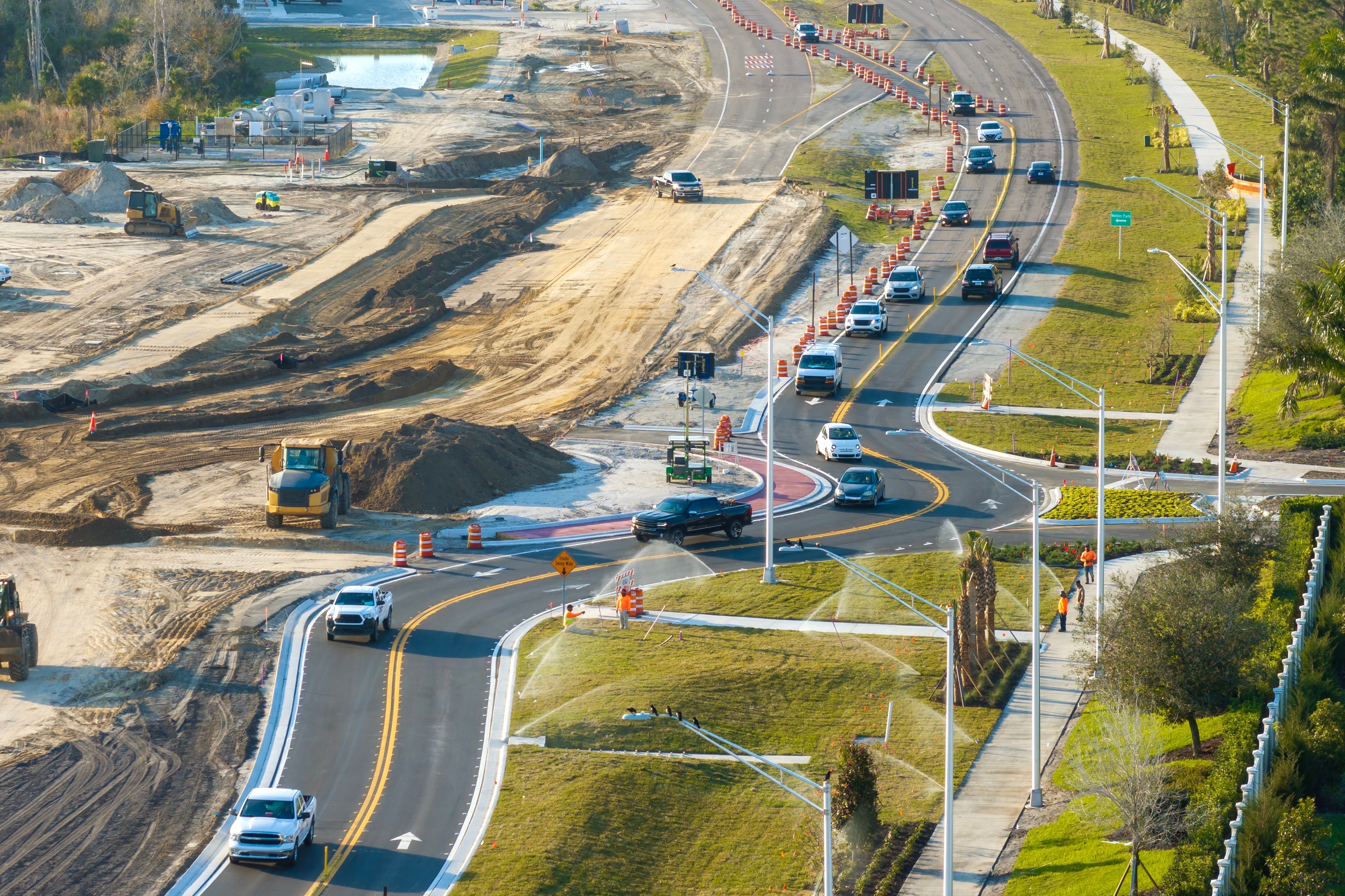
Without a new multi-year authorization in place, states may struggle to launch the large, complex transportation projects that typically span several years and require funding certainty. And those projects, contractors argue, are closely tied to job creation and broader economic expansion.
The timing of the campaign is no accident.
Booming Jobs, Looming Funding Gaps
According to a new AGC analysis of federal employment data, construction employment has climbed steadily in most major metropolitan areas since 2020.
Ten of the nation’s 15 largest metro areas added construction jobs between December 2020 and December 2025. The Dallas/Fort Worth metro area led the nation, adding 47,100 construction jobs.
Simonson attributes much of that growth to significant federal and state investments in transportation infrastructure. Improved highways, bridges, ports and transit systems that lower shipping costs, speed deliveries, reduce congestion and make regions more attractive to developers.
Developers seek strong transportation links when siting projects, while manufacturers depend on efficient freight corridors. In short, transportation networks underpin local and regional competitiveness.
However, despite a historic funding boost of roughly $108 billion provided by the IIJA for transit alone, major shortfalls persist.
The American Society of Civil Engineers estimates a $ 152 billion, 10-year funding gap for transit systems. In its 2025 infrastructure report card, the group upgraded the nation’s overall infrastructure grade from C- to C, but key sectors such as roads, transit, bridges, and rail remain under strain.
Meanwhile, the Congressional Budget Office projects the Highway Trust Fund will be depleted by 2028, with a cumulative shortfall reaching $280 billion by 2034. States face an additional $86.3 billion gap for roadway maintenance and repairs over the next decade.
While the IIJA delivered a 67-per-cent funding increase, early forecasts suggest the 2026 reauthorization bill may be more narrowly focused – and potentially leaner.
One bipartisan proposal gaining traction is the BASICS Act (H.R. 7437), which emphasizes bridge repairs and safety improvements for locally owned infrastructure. But whether overall funding levels will match the IIJA remains uncertain.
Targeted Advocacy and High Stakes
Against that backdrop, AGC is investing up to $2 million in a targeted public outreach effort. Digital and social media advertisements are already running in Texas and Missouri and are set to expand into additional states this spring.
The campaign is designed to reach constituents in key congressional districts and direct them to an online hub where they can learn about federal transportation funding and contact their members of Congress.
“While this is a big investment for an association like ours, it is a small price to pay to ensure continued economic growth in America’s communities,” Simonson said.
The strategy reflects a broader recognition that transportation policy is no longer a niche issue confined to Capitol Hill committee rooms. It is increasingly tied to workforce development, supply chain resilience, housing growth, and regional competitiveness.
The next several months will determine whether Congress can produce a new Surface Transportation bill before the current law expires. For contractors, state transportation departments, and local economies, the stakes are high.
A timely, long-term bill would provide the certainty states need to plan and execute multi-year megaprojects – modernizing aging highways, repairing structurally deficient bridges, expanding transit networks, and improving freight corridors.
Failure to act, industry leaders warn, could slow project pipelines, dampen job growth, and weaken the economic gains many metro areas have experienced since 2020.
For the AGC, the message is simple: America’s economic engine runs on its transportation network. And keeping that engine humming will require Congress to act – sooner rather than later.
Stay Connected
Stay connected with ConstructConnect News for construction industry news and construction market analysis to stay ahead of what’s building next.
About ConstructConnect
At ConstructConnect, our software solutions provide the information construction professionals need to start every project on a solid foundation. For more than 100 years, our keen insights and market intelligence have empowered commercial firms, building product manufacturers, trade contractors, and architects to make data-driven decisions, streamline preconstruction workflows, and maximize their productivity. Our newest offerings—including our comprehensive, AI-assisted software—help our clients find, bid on, and win more projects.
ConstructConnect operates as a business unit of Roper Technologies (Nasdaq: ROP), a constituent of the Nasdaq 100, S&P 500, and Fortune 1000.
For more information, visit constructconnect.com

.jpg?width=180&height=180&name=Grant%20Cameron%20(1).jpg)