KEY POINTS
-
U.S. Steel is restarting Granite City Works in 2026, rehiring 400 workers, citing rebounding steel demand.
-
Domestic steel output rose 9% year-over-year, driven by construction and automotive demand.
-
Nippon Steel’s $14.9 billion acquisition is paired with a pledge to make approximately $11 billion in new U.S. investments by 2028, with additional long‑term projects planned beyond that.
U.S. Steel announced plans to resume steelmaking at its Granite City Works plant in southern Illinois, citing rebounding demand and improving market conditions. The restart, detailed in the company’s December 4, 2025, statement, includes relighting a blast furnace that has been idle since 2023.
The shutdown at that time was prompted by weakened market conditions and United Auto Workers strikes.
The Granite City steel facility, located just across the Mississippi River from St. Louis, primarily produces rolled sheet steel used in construction, automotive, container, and pipe manufacturing. The last operating blast furnace at Granite City Works was idled two years ago, with steel processing winding down before the company reversed course this fall.
“After several months of carefully analyzing customer demand, we made the decision to restart a blast furnace,” said U.S. Steel President and CEO David B. Burritt. “Steel remains a highly competitive and cyclical industry, but we’re confident in our ability to operate the mill safely and profitably to meet 2026 demand.”
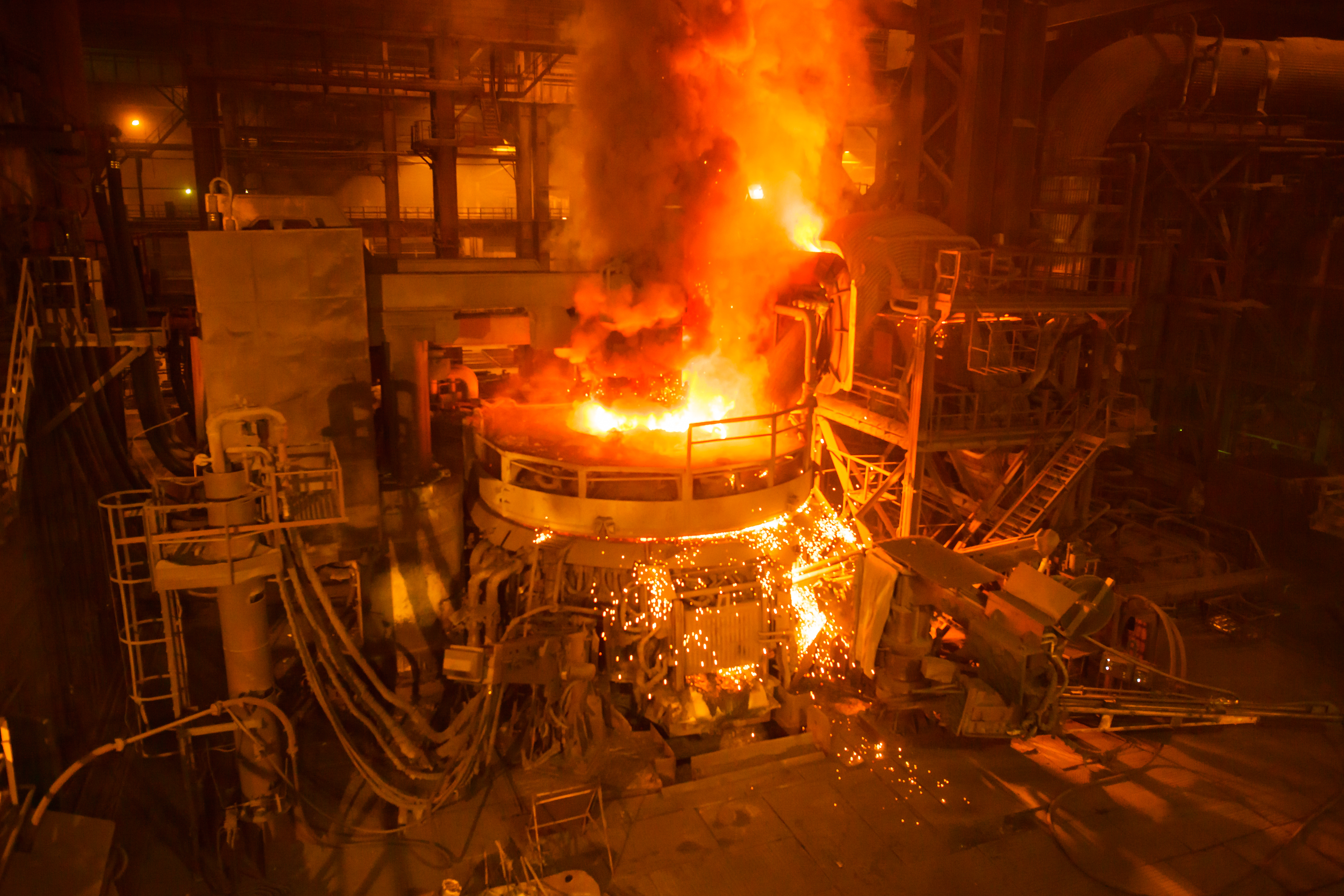
Steel can be produced in blast furnaces, which melt iron ore, coke, and limestone in a very hot, tall oven, or in electric arc furnaces, which primarily melt scrap metal using strong electricity, much like a powerful recycling machine.
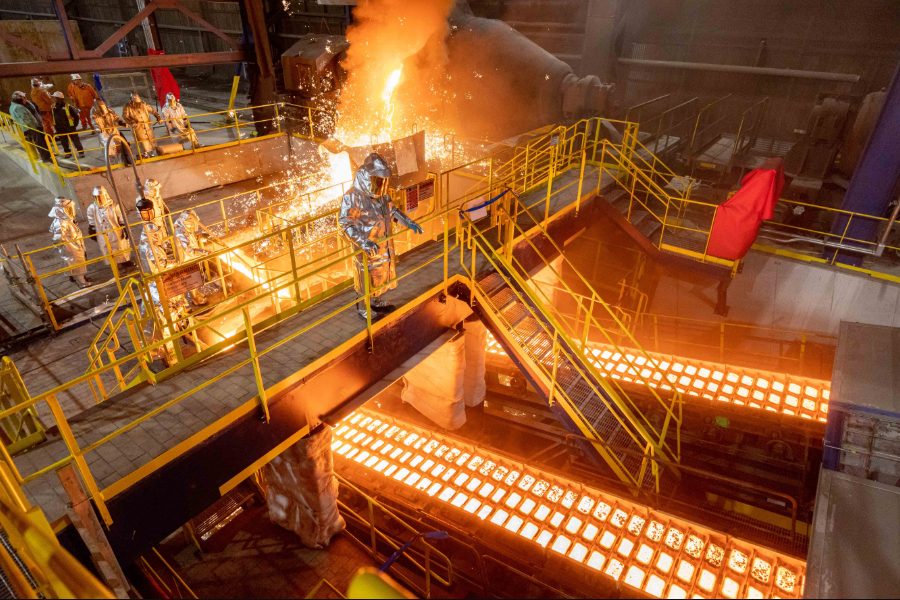
Employees working at the U. S. Steel Gary Works pig iron caster. Image: US Steel
Hiring and Production Timeline
The Pittsburgh-based steelmaker expects operations to resume in the first half of 2026, following the completion of hiring, training, and safety checks for equipment. U.S. Steel plans to rehire approximately 400 of the 500 workers needed for full operations, according to the Associated Press, signifying a local employment boost.
Currently, there are approximately 12 operating blast furnaces across the United States. This is a significant reduction from more than 140 in the 1970s, reflecting the industry’s decades-long shift toward smaller, electric-based production methods.
Market Backdrop and Domestic Demand
Recent improvements in demand across construction and automotive manufacturing have strengthened U.S. steel output. The American Iron and Steel Institute reported that U.S. mills shipped 7.7 million net tons in October 2025, a 9% increase year-over-year, and 5% higher shipments year-to-date compared with 2024.
The rebound is partly due to the ongoing impact of tariffs enacted under both the Trump and Biden administrations, which helped stabilize domestic pricing and incentivize production investment.
Economic data also reflects these improvements, according to Devin Bell, Associate Economist at ConstructConnect. As of September 2025, Bell noted that the Federal Reserve Bank of St. Louis reported that the Producer Price Index (PPI) for hot-rolled steel bars, plates, and structural shapes had declined roughly 20% from its mid-2022 peak.
While this indicates some price moderation, Bell stated that costs remain about 50% higher than their pandemic-era low, reflecting ongoing cost pressures in the supply chain.
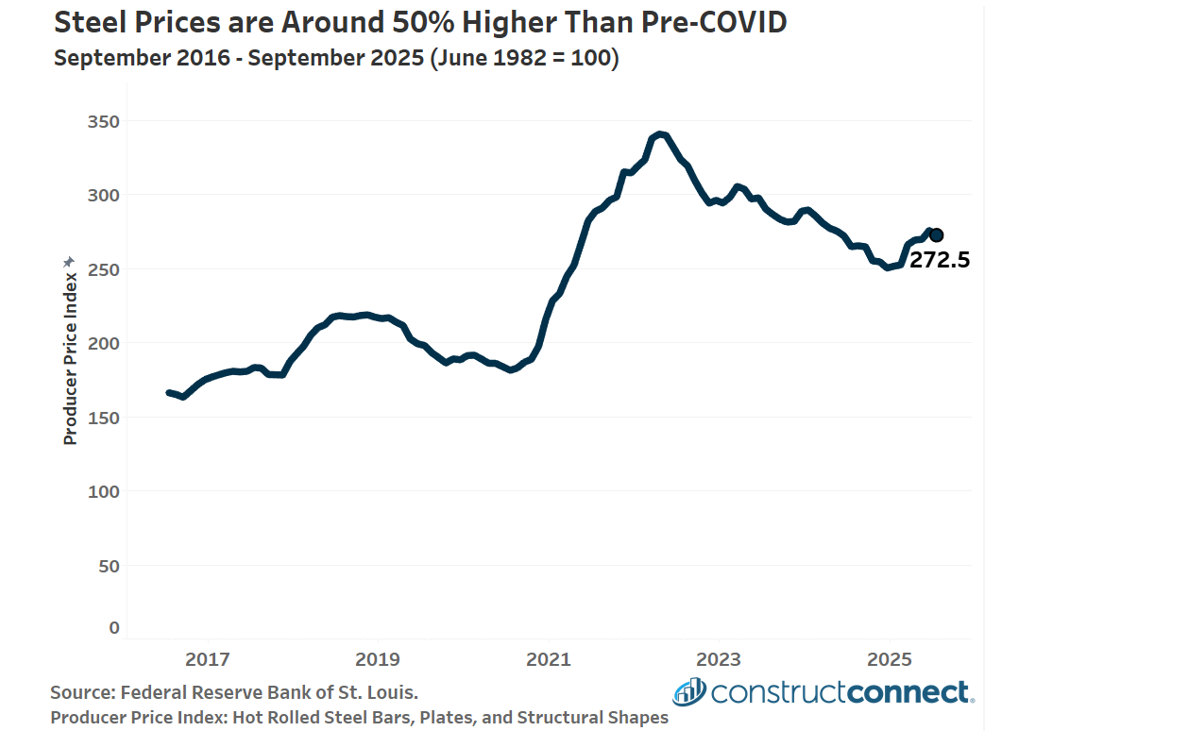 As of September 2025, the Federal Reserve Bank of St. Louis reports that the PPI for Hot Rolled Steel Bars, Plates, and Structural Shapes has declined approximately 20% from its June 2022 peak yet remains 50.3% higher than at its pandemic-era low. Image: ConstructConnect
The Steel and Construction Connection
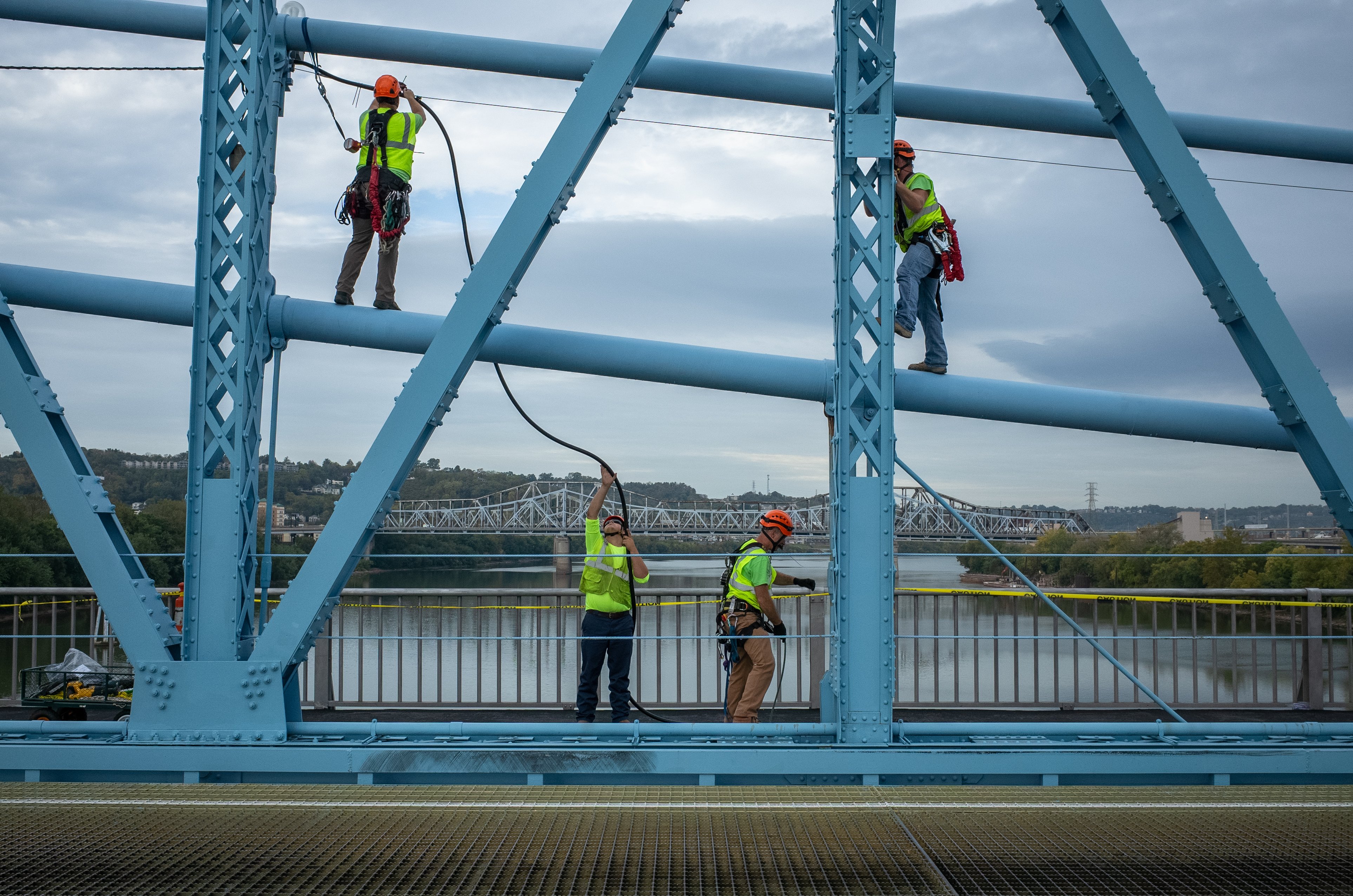
The surge in construction activity has been a significant contributor to the current rebound. “After the slowdown of 2020, demand from major steel-consuming industries, especially construction, automotive, and energy, came back sharply,” Bell said.
“Sustained infrastructure and industrial investment continue to drive demand, reinforcing the need for stable domestic production capacity.”
ConstructConnect project data revealed a 46% increase in nonresidential construction starts between 2020 and 2022, and according to Bell, it was fueled by major infrastructure and manufacturing projects. This growth, combined with tighter supply conditions during the pandemic recovery, sent steel prices to record highs in 2022 before moderating over the past year.

A Positive Turn for Granite City
The Granite City Works restart underscores a shift toward greater domestic self-sufficiency in steelmaking, aligning with both industry demand trends and national production priorities.
For the local workforce and the surrounding region, it marks a welcome reversal after years of uncertainty.
“Steelmaking in Granite City has always been deeply tied to American industry,” Burritt said. “This restart reflects renewed confidence in U.S. demand and our role in meeting it efficiently and responsibly.”
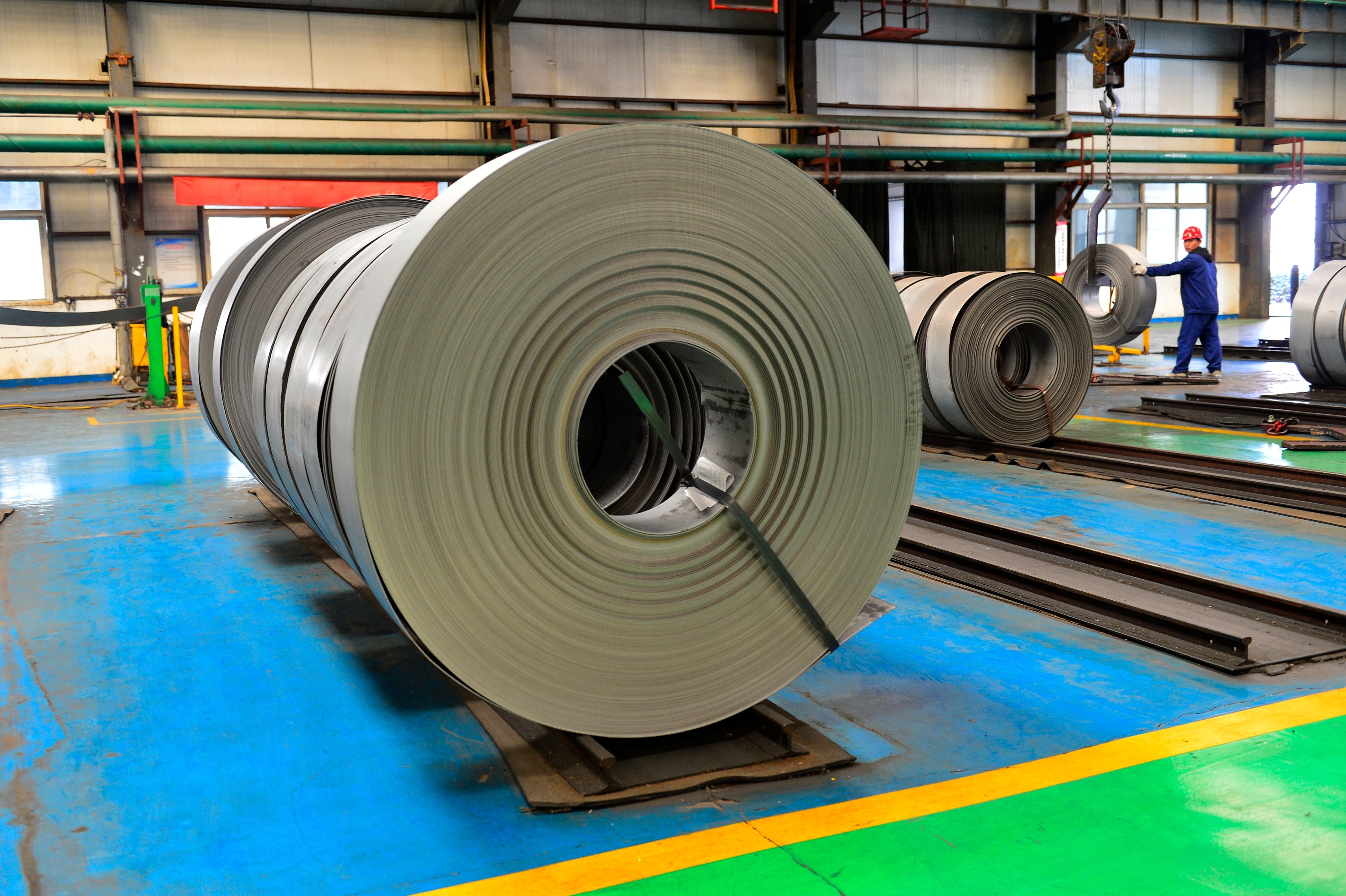
Hot-rolled steel coils are shown in a stock image of a factory building. US Steel’s facility, Granite City Works, primarily produces rolls of sheet steel for use in the construction, container, pipe, and automotive industries. Image: Shutterstock
Nippon Steel’s $14.9 billion US Steel acquisition is paired with a pledge to make approximately $11 billion in new U.S. investments by 2028, with additional long‑term projects planned beyond that.
As the steel industry continues to adapt, the reactivation of Granite City Works positions it to play a role in meeting domestic demand and supporting economic growth.
Read The Economics of Steel in Construction: Materials Management to Keep from Getting Bent Out of Shape by ConstructConnect Associate Economist Devin Bell
Stay Connected
Stay connected with ConstructConnect News, your source for construction economy insights, market trends, and project news.
About ConstructConnect
At ConstructConnect, our software solutions provide the information that construction professionals need to start every project on a solid foundation. For more than 100 years, our keen insights and market intelligence have empowered commercial firms, building product manufacturers, trade contractors, and architects to make data-driven decisions, streamline preconstruction workflows, and maximize their productivity. Our newest offerings—including our comprehensive, AI-assisted software—help our clients find, bid on, and win more projects.
ConstructConnect operates as a business unit of Roper Technologies (Nasdaq: ROP), a constituent of the Nasdaq 100, S&P 500, and Fortune 1000.
For more information, visit constructconnect.com