KEY POINTS
-
The Grand River Revitalization Project has received $11 million in federal funding from the NRCS, marking the final approval needed to begin construction.
-
The project will restore the river’s natural rapids, enhance aquatic habitats, and create new recreational opportunities, while also boosting local commerce and supporting business development along the riverfront.
-
The initiative, nearly two decades in the making, includes removing low-head dams and installing natural rock structures.
The City of Grand Rapids and Grand Rapids Whitewater have secured final approval to break ground on the Grand River Revitalization project, following the authorization of $11 million in federal funding from the U.S. Department of Agriculture’s Natural Resources Conservation Service (NRCS).
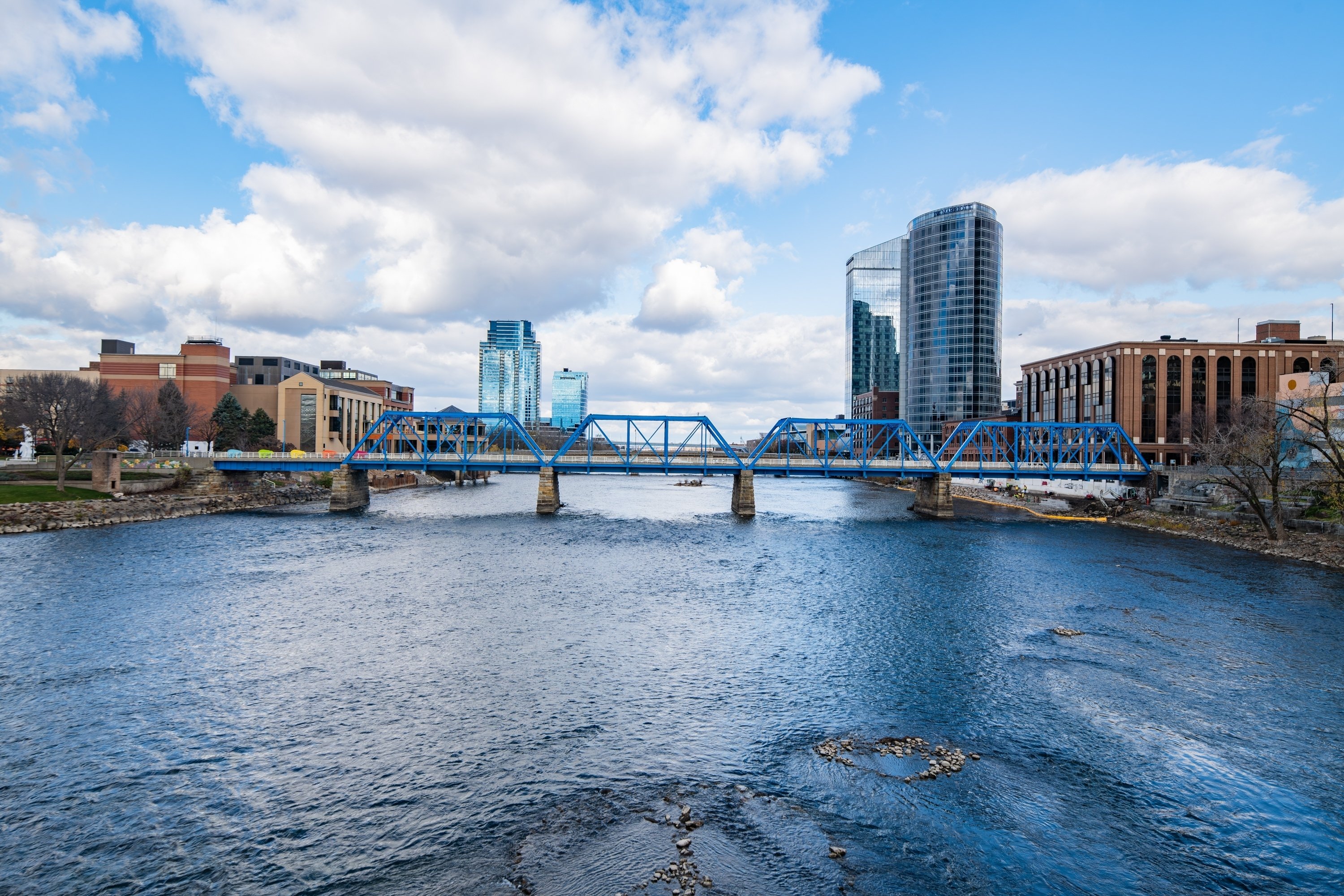
Construction crews will soon begin transforming the local waterway. The first phase of construction, known as the Lower Reach, will stretch from I-196 to Fulton Street, the city announced in a March 23, 2026, statement.
To lead the Lower Reach effort, the Grand Rapids City Commission has approved a $14.56 million contract with Taplin Group. Over the next two years, crews will remove four low-head dams and install natural rock structures.
Removal of Low-Head Dams
Low-head dams, often referred to as “weirs” or “run-of-river dams,” are in-water barriers that span the width of a waterway. Historically built to regulate water for uses like milling and irrigation, according to the US Army Corps of Engineers, many have now outlived their purpose.
The precise engineering efforts to remove the low-head dams will improve river flow, restore its natural rapids, and create safer public access, according to officials.
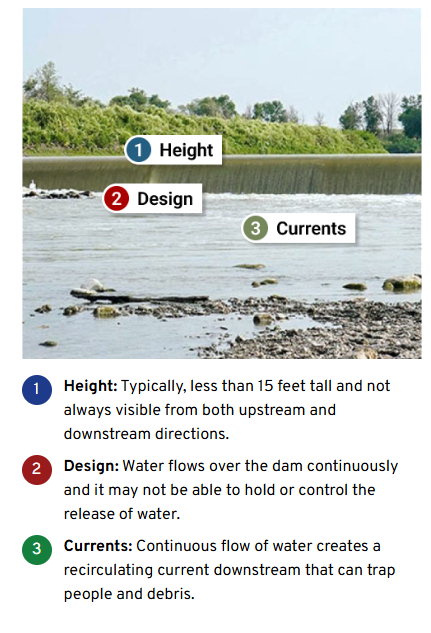
An illustration of a low-head dam. In Grand Rapids, crews will remove four low-head dams and install natural rock structures. Image: US Army Corps of Engineers
This initiative serves a larger purpose beyond reshaping the riverbed. By removing the low-head dams, project leaders explain that the project will significantly enhance aquatic habitats and eliminate known river hazards, creating a safer environment.
Mayor David LaGrand called the approval a historic moment for Grand Rapids. He emphasized that the work would transform the riverfront, providing the community with better access to the water and ensuring a healthier, more vibrant river for future generations.
Economic Growth Beyond Ecology
Beyond ecological health, the construction lays the groundwork for regional growth. Grand Rapids Whitewater anticipates that the restoration of the rapids will serve as a catalytic project, completely reimagining the downtown Grand River corridor.
By improving access to the water and removing structural barriers, the community expects to see a direct, positive impact on local commerce.
Like some cities that have reaped the benefits of investing in river restoration, Grand Rapids is following a path that blends environmental stewardship with community growth and opportunity.
Mirroring the success of urban ecological restoration efforts in cities like Chicago and New York, Grand Rapids is poised to become an example of how revitalized waterways can drive both environmental and economic progress.
Along with economic growth, the revitalized river is designed to support a wider variety of recreational activities, including paddleboarding, tubing, kayaking, canoeing, rafting, and angling, without impacting established fishing and boating.
By enhancing the river’s water flow diversity and improving its visual and auditory experience, the project aims to welcome more people to enjoy the river in new ways.
Stay Connected
Stay connected with ConstructConnect News for construction industry news and construction market analysis to stay ahead of what’s building next.
About ConstructConnect
At ConstructConnect, our software solutions provide the information that construction professionals need to start every project on a solid foundation. For more than 100 years, our keen insights and market intelligence have empowered commercial firms, building product manufacturers, trade contractors, and architects to make data-driven decisions, streamline preconstruction workflows, and maximize their productivity. Our newest offerings—including our comprehensive, AI-assisted software—help our clients find, bid on, and win more projects.
ConstructConnect operates as a business unit of Roper Technologies (Nasdaq: ROP), a constituent of the Nasdaq 100, S&P 500, and Fortune 1000.
For more information, visit constructconnect.com