KEY POINTS
-
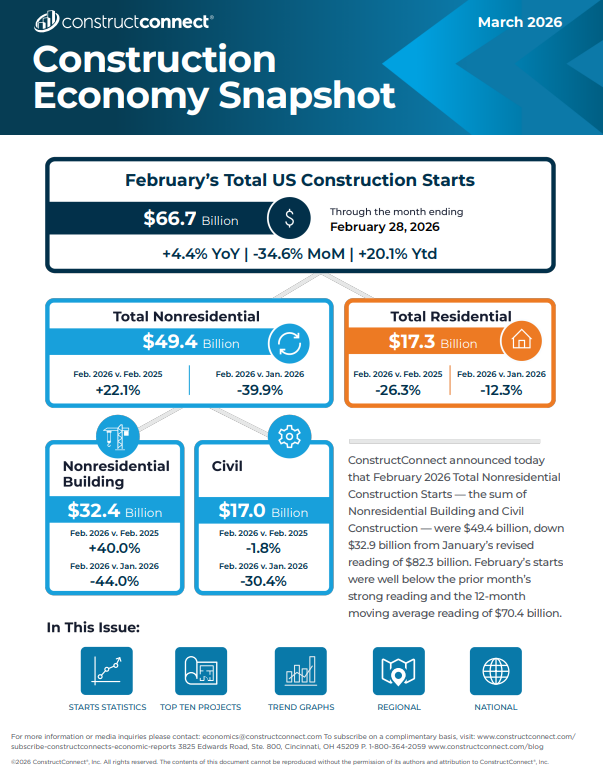
February 2026 Total Nonresidential Construction Starts fell to $49.4 billion, down $32.9 billion from January’s revised $82.3 billion and well below the 12-month moving average of $70.4 billion.
-
Both Nonresidential Building and Civil construction posted underwhelming readings, dragging the monthly total below the prior 12-month average of $71.1 billion.
-
Nonresidential Building reached $32.4 billion, up 40% year-over-year, driven by Offices (including data centers) gaining $10.3 billion. Year-to-date growth was an even stronger 80.1%, led by Offices, Hotels/Motels, and Hospitals and Clinics.
ConstructConnect announced today that February 2026 Total Nonresidential Construction Starts —the sum of Nonresidential Building and Civil Construction — were $49.4 billion, down $32.9 billion from January’s revised reading of $82.3 billion.
February’s construction starts were well below the prior month’s strong reading and the 12-month moving average reading of $70.4 billion.
February’s Total Nonresidential reading of $49.4 billion resulted from underwhelming readings for both Nonresidential Building and Civil construction. The month’s total was well below both the prior month’s strong reading and the prior 12-month average reading of $71.1 billion.
Megaprojects: Only $14.2 Billion in February
Only three megaprojects—defined as those valued at $1 billion or more — were recorded in February with a collective value of $14.2 billion. Compared to the previous twelve months, February’s megaprojects statistics were below the monthly averages of 5.6 projects and collective value of $18.1 billion.
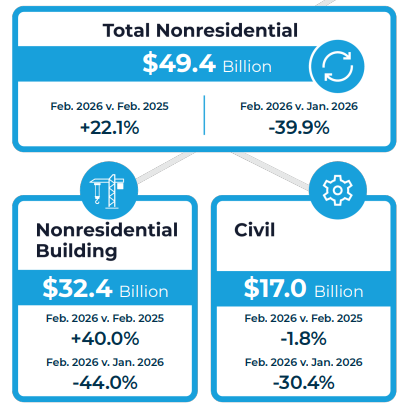
Shown in an image is the Total U.S. Nonresidential Construction Starts — the combined sum of Nonresidential Building and Civil Construction — for February 2026. Image: ConstructConnect Construction Economy Snapshot
Civil Construction Dips in February
Civil construction starts ended February at $17 billion, down 1.8% from a year ago. This change was driven by declines in Airports, Roads and Power Infrastructure.
These declines were largely offset by smaller dollar gains in Dams, Canals, and Marine Work, Bridges, and All Other Civil.
When measured using year-to-date results, Civil starts were down through February by 3.1% compared to the same period last year.

Michael Guckes, Chief Economist, ConstructConnect
Nonresidential Building Rises
Nonresidential Building ended the month at $32.4 billion, up 40% from a year ago.
The biggest dollar gains for the category came from Offices, including data centers, which were up $10.3 billion year-on-year and followed distantly by Hotels, Prisons, and Elementary Schools.
In contrast, the biggest dollar declines came from Manufacturing and Colleges/ Universities. Year-to-date measures were more encouraging, with growth of 80.1% through February, led by Offices, including data centers, Hotels/ Motels, and Hospitals and Clinics.
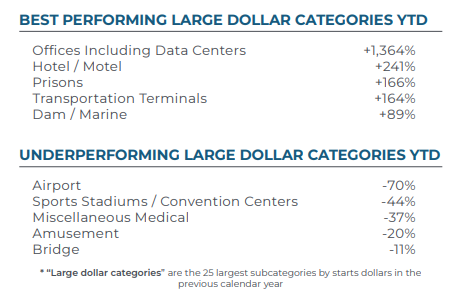
Shown in an image of the best-performing and underperforming large-dollar categories from the Total U.S. Nonresidential Construction Starts for February 2026. Image: ConstructConnect Construction Economy Snapshot
Residential Starts Weak in February
February Residential starts were weak, reporting a year-on-year declines of 26.3%. Most of this contraction originated from Single-family starts, which were down 33%.
Year-to-date readings are only slightly better with total declines of 22.3%. In both situations, most of the contractions have stemmed from the Single-family segment of the category.
Stay Connected
Stay connected with ConstructConnect News for construction industry news and construction market analysis to stay ahead of what’s building next.
Read the Construction Economy Snapshot for more details on construction labor, trends, and regional analysis.
About ConstructConnect
At ConstructConnect, our software solutions provide the information construction professionals need to start every project on a solid foundation. For more than 100 years, our insights and market intelligence have empowered commercial firms, manufacturers, trade contractors, and architects to make data-driven decisions and maximize productivity.
ConstructConnect is a business unit of Roper Technologies (Nasdaq: ROP), part of the Nasdaq 100, S&P 500, and Fortune 1000.
For more information, visit constructconnect.com